Bilbao is the starting point for the Camino Olvidado. Once an industrial city best avoided, it reinvented itself spectacularly — the Guggenheim Museum, designed by Frank Gehry and opened in 1997, was the catalyst, but the transformation runs deeper than one building. The casco historico (old town) is lively, walkable, and packed with pintxos bars that are among the best in Spain.
The Museo de Bellas Artes, near the Guggenheim, is worth a visit if contemporary art isn't your thing — it spans everything from medieval to modern. The cathedral in the old town and the gracious modernist neighborhoods along the Gran Via are also worth exploring.
Pension de la Fuente and Iturrienea Ostatua are both well-located options in the old town — family-run, characterful buildings with creaky wood floors and proper metal keys. Bilbao has accommodation at every level.
The camino departs from the old town along the river, passing the Guggenheim and splitting from the Camino del Norte at the Puente del Diablo.
Though settled by the Romans, modern Bilbao didn't take root until the 14th century. Iron ore deposits in the surrounding mountains drove rapid industrialization, making it unique in Spain. Globalization hit the economy hard in the 1980s, but the city reinvented itself through services, culture, and tourism — the Guggenheim being the most visible symbol of that transformation.
Bilbao's main festival is the Semana Grande (Aste Nagusia in Basque), celebrating the Assumption of Mary on August 15. The nine-day celebration kicks off the following Saturday with concerts, fireworks, and general revelry throughout the old town.
The first day is almost entirely on pavement, mostly on bidegorris (Basque bike/walking paths). It's flat and pleasant — parks, old stone houses with flower boxes, and no shortage of cafes. The pavement continues essentially all the way to Balmaseda (37 km from Bilbao), so plan your stopping point accordingly.
For a shorter first day, Alonsotegi is 11 km out, with the Agroturismo Ordaola. Guenes at 25 km is the standard stop. Those wanting a longer day can push on to Balmaseda at 37 km.
Accommodation in Bilbao at the start of the Olvidado.
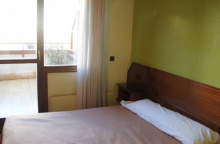

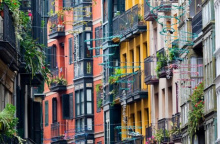





Alonsotegi is 11 km south of Bilbao along the river, making it an option for those who want a short first day. Agroturismo Ordaola offers accommodation in a rural setting on the edge of town. There are several short walking routes (paseos) in the surrounding hills if you arrive early and want to stretch your legs further.
The camino passes through on the bidegorri along the river valley.
Accommodation in Alonsotegi.
| Albergue Mendizain |
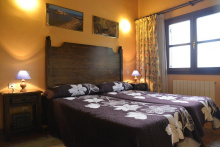
| Agroturismo Ordaola Booking.com |
|
La Quadra is a small settlement between Alonsotegi and Sodupe on the river valley route. No services. The camino continues on the bidegorri through this increasingly green landscape as Bilbao's urban sprawl gives way to the Basque countryside.
Sodupe is a village in the Nervion river valley between Bilbao and Guenes. It has a train station on the Bilbao-Balmaseda line, cafes, and basic services. The village sits at the junction of the Nervion and Cadagua rivers.
Guenes is the standard first stop on the Olvidado, 25 km from Bilbao. It's a good-sized town with all services. Hotel Erreka is the main accommodation option.
The camino passes in front of Guenes' late Gothic Santa Maria church, which figures in most pilgrims' photos of the first day.
The Katay restaurant, 100 m from the hotel to the left in front of a furniture factory, is recommended. There's an albergue on the outskirts (Albergue Sanxtolo), but it only takes groups, not individual pilgrims.
Beyond Guenes, the camino passes through Zalla (4 km) and reaches Balmaseda (9 km further). After Balmaseda, the Pais Vasco ends and the province of Burgos begins. The landscape becomes less urban — forests, dirt paths, streams. Pleasant walking with little elevation gain.
Accommodation in Güeñes.
| Hotel Erreka Güeñes ⭑ |
Aranguren is a small village between Guenes and Balmaseda. No notable services for pilgrims. The camino passes through the Basque countryside, which is becoming greener and more rural with every kilometer.
Mimetiz is a small settlement on the approach to Balmaseda. No services. The Cadagua river valley narrows here as you near the historic town.
Accommodation in Mimétiz.
| Hotel Chicote ⭑⭑ | |
| Hotel Ibarra |
| Casa Camino Antiguo Donativo€ 12 |
Balmaseda is the terminus for the Bilbao-Balmaseda train line — useful if you want to slice up these first flat kilometers differently. The town has a medieval bridge with a tower that's one of the most photographed spots on the early Olvidado. There's a Hotel Convento San Roque and an albergue that takes pilgrims.
Balmaseda is a pleasant town with all services. It's the last town in the Pais Vasco before crossing into the province of Burgos.
After Balmaseda, the landscape changes as you enter Burgos province and the Valle de Mena. It becomes much less urban — forests, dirt paths, streams. Still not much elevation. The walking is pleasant if not spectacular.
Accommodation in Balmaseda.
| Albergue Ikastola Zaharra 10-12€ 20 |