Almansa's castle is the first thing you see and the last thing you forget. Rising from a near-vertical rock outcrop above the town, it's one of the most dramatically sited fortifications in Spain. The climb up is steep but short, and the views from the top extend in every direction across the Castilian plain.
The town below is pleasant — an old quarter with narrow streets, a handsome Plaza de Santa María, and enough bars and restaurants to celebrate arriving after the long, dry approach from La Font de la Figuera. Almansa has all basic services including accommodation, supermarkets, and a pharmacy.
The Battle of Almansa (April 25, 1707) was the decisive engagement of the War of Spanish Succession in Spain. The Bourbon forces of Felipe V defeated the Habsburg army here, and the aftermath was severe — Xàtiva and other towns that had supported the Habsburg cause were punished, and the ancient privileges of the Crown of Aragón were abolished. The castle has been fortified since Almohad times and was expanded under Christian rule.
Accommodation in Almansa.
| Albergue Esclavas de María 7€ |
El Carrascal is a tiny settlement on the meseta between Almansa and Higueruela. No services. The name refers to the holm oak (carrasca) that once covered this landscape. The terrain is open and dry — classic Castilian-Manchego meseta.
Castillo de Marin de Arriba is a small hamlet with no services. The remains of a medieval fortification give it its name, though little is left to see. The walking through here is on open meseta — flat, exposed, and quiet.
Higueruela is a small village on the meseta with basic services — a bar and perhaps a small shop. The village offers a welcome break on the long stretch between Almansa and Chinchilla. The landscape is classic La Mancha: dry fields, scattered holm oaks, big skies, and a sense of space that can feel either liberating or relentless depending on the weather.
Accommodation in Higueruela.
Oncebreros de Abajo is a tiny hamlet on the meseta. No services. The name means "lower Oncebreros" — the upper version is just ahead. These are the kind of near-abandoned settlements that dot the Castilian interior, places where a handful of residents keep a centuries-old community alive.
Oncebreros de Arriba is the upper counterpart to Oncebreros de Abajo. No services. The two hamlets are close together and equally tiny. The meseta stretches in every direction — a landscape that demands either patience or appreciation, ideally both.
Hoya-Gonzalo is a small village on the meseta between Higueruela and Chinchilla. There may be a bar, but don't count on it. The village has a certain weathered dignity — stone houses and a church square that speaks to a time when the population was larger. The walking remains flat and exposed.
Accommodation in Hoya-Gonzalo.
| Municipal Hostel 10€ 8 |
Rincón is a tiny settlement on the approach to Chinchilla de Montearagón. No services. The name means "corner" — the village sits at a bend in the landscape where the terrain begins to rise toward Chinchilla's hilltop.
Chinchilla de Montearagón is one of those hilltop towns that makes you glad you kept walking. The castle crowns the summit, the old town tumbles down the slope below it, and the views across the meseta are enormous. It's far more interesting than nearby Albacete and worth an overnight stop.
The old town has a Plaza Mayor with arcaded buildings, several churches, and the kind of historic architecture that provincial capitals used to have before the modern era favored flatland expansion. There are caves in the hillside that were once used as dwellings and workshops — some are still in use.
Basic services are available — bars, a supermarket, and accommodation options. Albacete is close if you need more.
Chinchilla was the capital of the Marquesado de Villena, one of the most powerful medieval lordships in Castile. Its strategic position on a hilltop controlling the routes between Valencia and the interior made it important from Roman times onward. The castle was built by the Marquis of Villena in the 15th century. The town declined after Albacete — its flat, accessible neighbor — became the provincial capital in the 19th century.
Accommodation in Chinchilla de Montearagón.
Polígono de Camporroso is an industrial zone on the outskirts of Albacete. No pilgrim services within the polígono itself, but the city center is close. The camino passes through here on the approach to or exit from Albacete — it's not scenic, but it's brief.
Albacete is the provincial capital and has all services — the full range of accommodation, restaurants, supermarkets, banks, and transport connections. It's a practical stop rather than a scenic one, though the old town around the cathedral has some character.
Albacete has been famous for knife-making since at least the 15th century, and the Museo de la Cuchillería (Knife Museum) is genuinely interesting. The tradition of forging navajas — the folding knives that were once carried by every Spaniard — is still alive here, and the museum traces the craft from its origins to the present.
The Pasaje de Lodares, a glass-covered commercial passage from the early 20th century, is worth a detour — it's one of the most elegant shopping arcades in Spain outside of Madrid or Barcelona.
Albacete's knife-making tradition dates to at least the 15th century, when Moorish craftsmen established forges here. The city's navajas became so famous — and so feared — that various kings attempted to ban them. The tradition survived every prohibition and continues today, though modern production is as much industrial as artisanal.
Accommodation in Albacete.

La Gineta is a small town on the meseta east of La Roda. Basic services — a bar or two and perhaps a small shop. The town sits on the flat, open plain of La Mancha, and the walking in every direction is straight and exposed. This is big-sky country.
Accommodation in La Gineta.
| Hostal Los Gabrieles |
La Roda is a pleasant Manchego town with a good old quarter centered on the Plaza Mayor. The Iglesia del Salvador has a fine Renaissance portal. The town has all basic services — supermarkets, bars, restaurants, pharmacy, and accommodation.
La Roda is known locally for miguelitos — a puff pastry filled with cream that's become the town's culinary calling card. Try one at any bakery in the center.
Accommodation in La Roda.
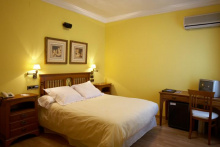
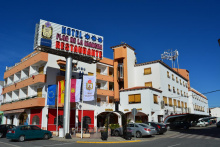
Minaya is a small town on the meseta between La Roda and Casas de los Pinos. Basic services — a bar and perhaps a shop. The landscape is relentlessly flat, the horizons enormous. This is deep La Mancha, the territory that Cervantes described and that hasn't changed as much as you might think.
Accommodation in Minaya.
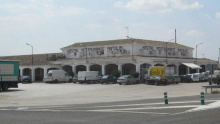
| Hostal Antolín Booking.com |
|
Casas de los Pinos is a small village named for the pine trees that once (and still partially) surround it. Basic services may be available — a bar if you're lucky. The village is a welcome point of reference on the otherwise featureless meseta.
San Clemente is a surprise — a small Manchego town with a remarkably beautiful old quarter. The Renaissance architecture here is exceptional for a town of this size. The Plaza Mayor and the surrounding streets have elegant facades, noble houses, and a sense of former importance that the current population doesn't quite explain.
The town has good services — bars, restaurants, shops, and accommodation. It's one of the more rewarding stops on the Levante's long Manchego crossing.
San Clemente was briefly the seat of the Chancillería (high court) of Castile and served as a temporary residence for the Spanish court. This explains the disproportionately grand Renaissance architecture in what is now a small provincial town. The town's noble houses, church facades, and public buildings date from its 16th and 17th-century heyday.
Accommodation in San Clemente (Cuenca).
| Casa Rural Alcañiz |
Castillo de Santiaguillo is a small hamlet with the ruins of a castle that once belonged to the Order of Santiago. No services. The ruins are modest but atmospheric — a reminder that this territory was once the frontier between Christian and Moorish Spain, defended by the military-religious orders.
Las Pedroñeras calls itself the Capital del Ajo — the garlic capital of Spain — and the claim is legitimate. The surrounding fields are planted with garlic as far as the eye can see, and during harvest season (June-July) the entire town smells of it. The morado (purple) garlic from here is prized across Spain.
The town has all basic services — supermarkets, bars, restaurants, pharmacy. If you like garlic, you'll enjoy the local cuisine. If you don't, you're out of luck.
Accommodation in Las Pedroñeras.
| Casa Mauricio |
| Hostal El Bomba |
El Pedernoso is a small Manchego village between Las Pedroñeras and Santa María de los Llanos. Basic services — a bar if it's open. The meseta continues, flat and agricultural, with occasional vineyards breaking up the cereal fields. You're entering windmill country now.
Santa María de los Llanos is a small village on the meseta. The name — "Saint Mary of the Plains" — describes the landscape perfectly. Basic services may be available. The walking is flat and the horizons seem infinite. Mota del Cuervo and its windmills are not far ahead.
Accommodation in Santa María de los Llanos.
| Casa Rural El Calvario |
Mota del Cuervo is La Mancha as you imagined it. A line of windmills stands on the ridge above the town — seven of them, white-walled and dramatic against the Manchego sky. These are the molinos de viento that Cervantes made famous (though he set the scene at nearby Campo de Criptana). Some of the windmills are original; others have been restored.
The town below is pleasant, with a good Plaza Mayor and enough services to make it a comfortable stop — bars, restaurants, shops, and accommodation. The Cueva del Fraile is a restaurant built into caves beneath the town, worth seeking out.
The windmills are best visited in the late afternoon light, when the white walls glow orange against the darkening sky.
The windmills of La Mancha were built from the 16th century onward to grind the wheat that grew on the meseta. Cervantes immortalized them in Don Quixote (1605), where the knight-errant mistakes them for giants. Whether Cervantes had these specific windmills in mind is debated, but the image has defined La Mancha ever since.
Accommodation in Mota del Cuervo.
El Toboso is the village of Dulcinea — Don Quixote's idealized lady love. Cervantes set her here, and the town has embraced the connection ever since. The Casa-Museo de Dulcinea recreates a wealthy Manchego household of the era, and the streets have a Quixotic atmosphere that's hard to separate from marketing but enjoyable nonetheless.
The Iglesia de San Antonio Abad is worth a look, and the Centro Cervantino houses an unusual collection: editions of Don Quixote in dozens of languages, donated by heads of state and cultural institutions from around the world.
Basic services are available — bars, a small shop, accommodation. El Toboso is a natural overnight stop and the most characterful village on the La Mancha crossing.
El Toboso was a real village before Cervantes made it famous. By setting Dulcinea here, he gave a small Manchego agricultural town an immortal literary identity. The real "Dulcinea" may have been inspired by Ana Martínez Zarco de Morales, a local woman — but the debate is endless and ultimately beside the point. What matters is that El Toboso became a symbol of the ordinary Spanish village elevated by imagination.
Accommodation in El Toboso.
| Dulcinea del Toboso Youth Hostel |
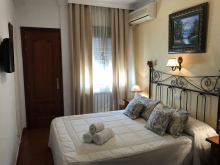
| Casa Rural Casa de la Torre ⭑⭑⭑ | |
| Casa del Cómico ⭑⭑ 20*€ |
| Hospedería Convento Trinitarias 18 |
| Hostal El Quijote 15€ 14 |
Quintanar de la Orden is a working Manchego town with all basic services — supermarkets, bars, restaurants, pharmacy, and accommodation. The town was historically linked to the Order of Santiago, which controlled this territory during the Reconquista. The Plaza Mayor is pleasant, and the Iglesia de Santiago has a fine portal.
After the quiet literary charm of El Toboso, Quintanar feels more substantial. It's a good place to resupply for the long, flat stretches ahead toward Toledo.
Accommodation in Quintanar de la Orden.
| Hostal San Francisco |
La Puebla de Almoradiel is a small Manchego town between Quintanar and La Villa de Don Fadrique. Basic services — bars and a shop. The landscape is vast and flat, dominated by vineyards and cereal fields. The Moorish-derived name (almoradiel suggests an Arabic origin) hints at the layered history of this seemingly simple agricultural town.
Accommodation in La Puebla de Almoradiel.
| Parish hostel for pilgrims 3 |
| Casa Rural El Cigüela |
La Villa de Don Fadrique is a small town on the meseta with basic services — bars, a shop, and a pharmacy. The name commemorates Don Fadrique, a medieval lord. The town has a pleasant plaza and church, and the walking through here continues flat and straight across La Mancha's enormous horizons.
Accommodation in La Villa de Don Fadrique.
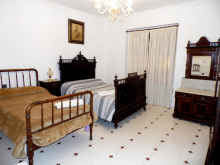
Villacañas is known for its silos — not grain silos, but underground cave dwellings carved into the clay subsoil. Families lived in these subterranean houses well into the 20th century, and several have been preserved as a museum. The constant underground temperature made them cool in summer and warm in winter — a practical response to La Mancha's extreme climate.
The town has all basic services. It's a more interesting stop than it first appears.
The silos of Villacañas were first documented in the 16th century, though they may be older. At their peak, hundreds of families lived underground. The practice declined in the mid-20th century as modern housing became available, but the remaining silos are now protected as cultural heritage — a unique piece of La Mancha's social history.
Accommodation in Villacañas.
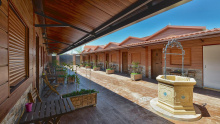
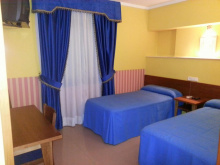
Tembleque's Plaza Mayor is one of the finest in Spain — a grand, irregular square surrounded by buildings with wooden galleries and balconies supported by stone columns. The galleries were used for watching bullfights and public spectacles, and the plaza retains the atmosphere of a place designed for performance and community life. It's worth lingering.
The town also has the Iglesia de Nuestra Señora de la Asunción, with a distinctive tower, and a pleasant old quarter. Basic services are available. Tembleque is one of the highlights of the Levante's Manchego crossing, and sleeping here to see the plaza at night — when it's lit and empty — is recommended.
Tembleque was a possession of the Order of San Juan (the Knights Hospitaller). The Plaza Mayor dates from the 17th century and reflects the town's importance as a stopping point on the road between Madrid and Andalusia. The red cross of the Order of San Juan is still visible on some of the buildings.
Accommodation in Tembleque.
| Casa Rural El Balcón de la Mancha |
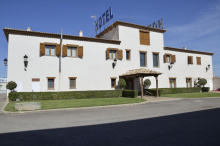
Mora is an olive oil town — the surrounding groves produce some of the best aceite de oliva in Castilla-La Mancha. The castle ruins above the town are worth the climb for the views over the olive-covered hills. The town has all basic services and makes a practical stop on the way to Toledo.
You're leaving La Mancha proper now and entering the province of Toledo. The terrain is becoming hillier, and the landscape more varied.
Accommodation in Mora (Toledo).
| Hostal El Toledano ⭑⭑ |
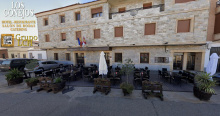
Mascaraque is a small village with a castle — the Castillo de Mascaraque, privately owned but visible from the road. The village has minimal services. You're approaching the Montes de Toledo now, and the terrain is more interesting than the flat meseta behind you.
Accommodation in Mascaraque.
| Casa Rural K’Alfonso |
Almonacid de Toledo is dominated by the ruins of its castle, perched on a hill above the village. The castle saw action during the Peninsular War — the Battle of Almonacid in 1809 was fought here between French and Spanish forces. The ruins are atmospheric and worth exploring.
Basic services are available in the village below. Toledo is getting close — you can sense the approach of a major city in the increasing size of the towns.
The Battle of Almonacid (August 11, 1809) was part of the Peninsular War. A Spanish army under General Venegas attempted to engage French forces near the castle. The result was a French victory, but the battle was part of the broader campaign that eventually drove Napoleon's forces from Spain.
Nambroca is a small village on the outskirts of Toledo. No notable pilgrim services. The village is increasingly suburban in character — you're in Toledo's orbit now, and the final approach to the city is close.
Burguillos de Toledo is a residential village on the southern outskirts of Toledo. Basic services — bars and shops. The village has grown as a suburb of Toledo, and the walking through here is on roads through a semi-urban landscape. The old city is visible ahead.
Cobisa is a small village on the final approach to Toledo from the south. No notable services. The terrain is hilly and increasingly dramatic as you approach the Tagus River gorge that surrounds Toledo's old town.
Accommodation in Cobisa.
| La Villa de Cobisa |
Toledo is one of Spain's great cities, and you should allow at least a full day for exploration. The entire old town is a UNESCO World Heritage Site, perched on a granite hill almost entirely surrounded by the Tagus River — a natural fortress that has been continuously inhabited for over two millennia.
Toledo is called the City of Three Cultures for the centuries when Christians, Muslims, and Jews coexisted here. That heritage is visible everywhere: the cathedral is one of the greatest Gothic churches in Spain, the Mezquita del Cristo de la Luz is a beautifully preserved 10th-century mosque, and the Sinagoga de Santa María la Blanca and Sinagoga del Tránsito represent the Jewish community that thrived here before the expulsion of 1492.
El Greco made Toledo his home, and his paintings are scattered across the city — the Museo del Greco and the Iglesia de Santo Tomé (housing The Burial of the Count of Orgaz) are essential visits.
The Alcázar, rebuilt after the Civil War, houses the Army Museum. The old town's labyrinthine streets reward aimless wandering — around every corner is another church, convent, or courtyard.
Toledo has all services. Accommodation ranges from hostels to the Parador, set in a historic building with views over the city. The town is a major tourist destination, so book ahead during peak season. The old town is best explored early in the morning or in the evening, when the day-trippers from Madrid have gone home.
Toledo was the capital of Visigothic Spain, a major center under Moorish rule (where it was known as Tulaytulah), and the seat of the Spanish court until Felipe II moved the capital to Madrid in 1561. The Toledo School of Translators, active in the 12th and 13th centuries, translated Arabic, Greek, and Hebrew texts into Latin and Castilian, transmitting classical knowledge to medieval Europe. The city's metalworking tradition — Toledo steel — has been famous since Roman times.
Corpus Christi in Toledo (May/June, date varies) is one of the most elaborate in Spain. The procession through the old town's narrow streets, with the massive silver monstrance, is a spectacular sight. The streets are decorated with awnings, tapestries, and aromatic herbs.
Accommodation in Toledo.
| Albergue Castillo San Servando |
| Youth Hostel Los Pascuales ⭑ 24 |
| Camping El Greco |
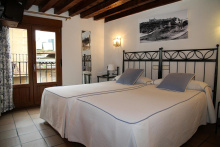
| Hotel Sol ⭑⭑ Booking.com |
Rielves is a small village west of Toledo. Basic services — a bar may be available. The camino leaves Toledo heading west, and the landscape changes quickly from the dramatic Tagus gorge to gentler rolling countryside. You're heading toward the valley of the Alberche River and the mountains beyond.
Barcience has a well-preserved 15th-century castle that's visible from the road — a handsome square tower with turrets. The castle is privately owned and can't be visited, but it's photogenic from the outside. The village itself has minimal services.
Torrijos is a working town with all basic services — supermarkets, bars, restaurants, pharmacy, accommodation. The Colegiata del Santísimo Sacramento is the architectural highlight — a grand church that seems too large for the current town but speaks to Torrijos's former importance as a seat of the Lords of Maqueda.
The town is a practical resupply stop on the way west from Toledo.
Accommodation in Torrijos.
| Albergue de Torrijos Free€ 8 |
Val de Santo Domingo is a small village between Torrijos and Maqueda. Basic services may be available — a bar if you're fortunate. The camino passes through on quiet roads. The landscape is rolling agricultural country with scattered olive groves.
Maqueda has an impressive castle — the Castillo de la Vela, with well-preserved walls and towers visible from the approach. The castle dates from the 15th century and was a stronghold of the Lords of Maqueda. The town retains fragments of its medieval walls and has a pleasant, unhurried atmosphere.
Basic services are available. Maqueda sits at a crossroads and has been a waypoint on routes between Toledo and Ávila for centuries.
Escalona sits on the banks of the Río Alberche, and the castle ruins dominate the town. The Castillo de Escalona was one of the largest fortifications in Castile — its massive walls and towers, though partly ruined, give a sense of the power that once resided here. The town's position above the river is dramatic, especially approaching from the east.
The old town has narrow streets and a medieval feel. Basic services are available — bars, shops, and accommodation. The river below the castle offers swimming spots in summer.
Escalona's castle was the seat of Don Álvaro de Luna, the all-powerful constable of Castile under Juan II. Don Álvaro's rise and spectacular fall — he was executed in Valladolid in 1453 — is one of the great dramas of medieval Castilian politics. The castle's size reflects the ambition of a man who ruled Castile in all but name.
Accommodation in Escalona.
| Albergue Municipal Escalona 6 |
| Casa Rural Plácida |
Almorox is a wine-producing town with a pleasant Plaza Mayor and the Iglesia de San Cristóbal. The local wines, made from Garnacha grapes, are robust and honest — ask for the local red at any bar. Basic services are available.
The landscape is changing as you approach the Sierra de Gredos foothills. The flat meseta is behind you, and the terrain is becoming hillier and more forested.
Accommodation in Almorox.
| Casa Rural Royal Almorox Booking.com |
| Posada Bemi Booking.com |