Like the ruins of San Antón before Castrojeriz, the Ermita de San Nicolás has a long history of caring for pilgrims. Both stand alone far from any town, and both continue to serve walkers in their own way — the ermita operates a basic donativo albergue with a hospitalero and communal atmosphere.
The building is modest but the setting, alone in the meseta with views in every direction, gives it a contemplative quality that larger places sometimes lack.
Just beyond the ermita is the Puente Fitero, which crosses the river of the same name and brings you into the province of Palencia.
Accommodation in Ermita de San Nicolás.
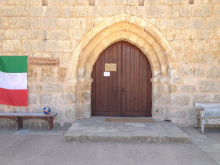
| Albergue de San Nicolas Donativo€ 12 |
|

Crossing the Puente Fitero brings you into the province of Palencia. The bridge here has survived the centuries, though others to the south disappeared long ago — taking with them the pilgrim traffic whose commerce built several once-prosperous towns into their current obscurity.
Palencia is a transitional province. The meseta continues, but the landscape begins to show more variety — the Canal de Castilla introduces water features, and the Tierra de Campos ahead has a different quality to the plains around Burgos. The villages remain small and services thin, but the churches contain surprises that repay curiosity.
Palencia's food leans into lamb, lechazo (suckling lamb roasted in a wood oven), and the thick bean stews that sustained generations of meseta farmers.
The Iglesia de San Pedro Apóstol at the entrance to town has an image of Santiago Peregrino. The village name, the river, and the word for the stone markers (hitos) that mark the camino all share a common Latin root — iter, meaning 'path' or 'journey.'
A couple of bars and an albergue provide basic services. The village has a quiet, end-of-the-road feel, despite being squarely on the camino.
Accommodation in Itero de la Vega.
| Albergue de Peregrinos de Itero del Castillo 10€ 7 |
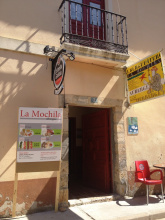
| Albergue de Itero La Mochilla 12-15€ 20 Booking.com |
|
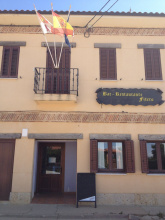
| Albergue Puente Fitero 14-17€ 23 Booking.com |
|
| Albergue Hogar del Peregrino 24€ 7 Booking.com |
The fields around Boadilla are dotted with adobe palomares — traditional dovecotes. Find your way to one and explore the interior: thousands of small niches line the walls, each designed for a pair of pigeons. The birds were kept for their droppings (used as fertilizer) as much as for their meat.
Adjacent to the town square is the Romanesque Iglesia de la Asunción and a well-preserved rollo jurisdiccional — a carved stone column that marked the town's judicial authority. It's one of the better-preserved examples on the meseta. A couple of bars and an albergue serve the village.
San Antonio de Padua is celebrated from June 13 to 15.
The camino leaving Boadilla joins a path alongside the Canal de Castilla, an 18th-century waterway built for both irrigation and transport. You'll follow the canal to the outskirts of Frómista, crossing at one of the locks. It's flat, pleasant walking with water alongside — a novelty on the meseta.
Accommodation in Boadilla del Camino.
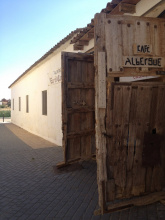
| Albergue En el Camino 15€ 48 |
|
| Juntos Albergue de Peregrinos 18€ 10 |
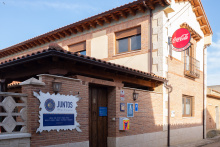
|
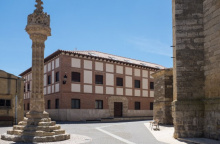


Frómista sits at the southernmost point of the Camino Francés and at the historical center of Spain's wheat country. The arrival of the Canal de Castilla in the late 18th century stabilized a town whose fortunes had risen and fallen with the grain harvests.
The Iglesia de San Martín is the reason to stop. Rebuilt and restored in the early 20th century to something close to its 11th-century form, it's considered one of the purest examples of Romanesque architecture in Spain. The proportions are harmonious, the carved corbels on the exterior are lively (animals, humans, grotesques), and the interior is bare and beautiful. Whether the restoration went too far — making it look too perfect — is a debate that has occupied art historians for a century. Judge for yourself.
Several albergues, restaurants, and a supermarket serve the town. All basic services available.
Pedro González Telmo, patron saint of sailors and the namesake of Saint Elmo's Fire, was born in Frómista. The town's strategic position at the canal junction made it a commercial hub in the 18th and 19th centuries.
San Telmo is celebrated on the Monday after Easter Monday — a major event for Frómista. San Telmillo follows the next Sunday. Santiago on July 25. The Virgen de Otero in September.
Leaving Frómista requires retracing your steps to the main intersection — don't wander blindly through town. If you're departing before dawn, scout the arrows the evening before. The trail follows a straight path alongside the road toward Población de Campos.
Accommodation in Frómista.
| Albergue de Fromista 15€ 56 |
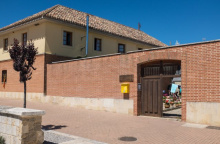
|
| Albergue Estrella del Camino 15€ 34 Booking.com |

|
| Albergue Betania 7 |
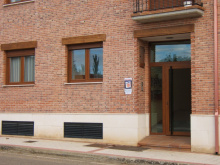
|
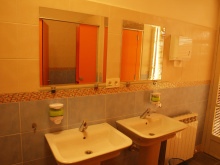
| Albergue Luz de Frómista 15€ 26 |
|
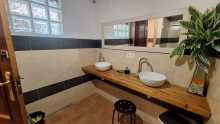
| El Chiringuito Del Camino 15€ 12 |
|
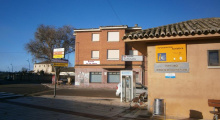
| Pension La Via Lactea Booking.com |
|
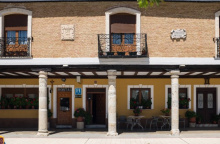
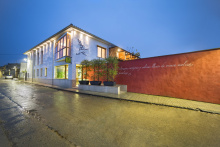
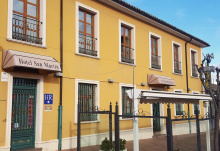

Población de Campos is a small village on the road from Frómista with a bar and an albergue. The Ermita de la Virgen del Socorro, just outside town, has a modest Romanesque apse. The village serves mainly as a junction point — the alternate route to Villalcázar de Sirga via Villovieco branches off here.
Accommodation in Población de Campos.
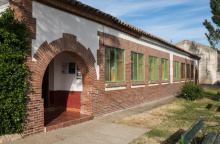
| Albergue de Población de Campos 10€ 18 |
|
| Casa Rural Amanecer en Campos Booking.com |

|

After Población de Campos, an alternate route branches off to Villalcázar de Sirga via Villovieco. This variant bypasses Revenga de Campos and Villarmentero de Campos — neither of which has much to offer — and follows quieter farm tracks through open countryside.
The main route follows the road more closely and passes through both villages. Either route reaches Villalcázar de Sirga; the Villovieco variant is slightly shorter and more rural. Both are flat and well-marked.
Revenga de Campos is a small village on the main route between Frómista and Villalcázar de Sirga. A bar provides the only service. The walking is flat and straight.

Another tiny meseta village between Revenga and Villalcázar de Sirga. No reliable services. The landscape here is pure Tierra de Campos — flat, agricultural, and vast.
Accommodation in Villarmentero de Campos.
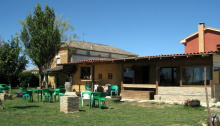
| Albergue Villarmentero de Campos Donativo€ 7 |
|
| Albergue Amanecer 13€ 18 |
|
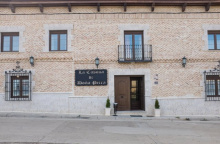

The Iglesia de Santa María la Blanca dominates the village with the appearance of a fortress-church — which is exactly what it was. The Knights Templar built and maintained it, and the military architecture is unmistakable: thick walls, crenellations, and a massive presence that seems designed to intimidate as much as to inspire.
Inside, the Gothic interior houses a polychrome statue of the White Virgin that King Alfonso X credited with miraculous healings in his Cantigas de Santa María — the 13th-century collection of songs to the Virgin that is one of the great works of medieval Iberian literature. The double tomb of the Infante Don Felipe and his wife Doña Leonor, carved in stone, is among the finest Gothic funerary sculpture in Spain.
A couple of bars and an albergue serve the village. The church is sometimes locked — ask at the bar about visiting.
Accommodation in Villalcázar de Sirga.
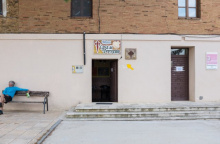
| Albergue Villalcázar de Sirga Donativo€ 16 |
|
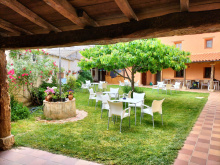
| Albergue Don Camino 16€ 26 Booking.com |
|
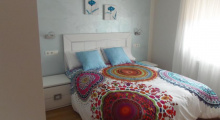

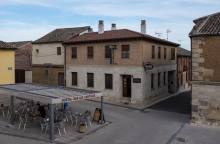


Carrión de los Condes sits at the junction of the pilgrim road and the Río Carrión, a position that made it a prosperous medieval town. Today it's quieter, but enough of the old architecture survives to justify a proper exploration.
The Iglesia de Santiago has a magnificent Romanesque frieze over the doorway — a procession of 24 elders of the Apocalypse that ranks among the finest Romanesque sculptural programs in Spain. The Iglesia de Santa María del Camino, at the other end of town, has a Romanesque doorway with scenes of the Tribute of the Hundred Maidens.
The Real Monasterio de Santa Clara, still an active convent, has a small museum with a notable collection of medieval art. The Monasterio de San Zoilo (now a hotel) preserves a Renaissance cloister with intricate vaulting — you can visit without being a guest.
Several albergues and a range of restaurants serve the town. The Café Bar España doubles as the local bus stop — inquire about schedules at the bar. All services available.
When leaving Carrión de los Condes, stock up on water. The next 17 km to Calzadilla de la Cueza have little shade and no reliable water source. In recent years a seasonal roadside kiosk has appeared at roughly the halfway point, but don't count on it.
Carrión was one of the most important towns in medieval Castile, positioned at a river crossing on both the pilgrim road and the north-south trade route. Charlemagne reportedly used the fields here for an encampment. The town's name derives from the Counts (Condes) who governed it — the same counts who appear, unfavorably, in the Cantar de Mio Cid, where their mistreatment of El Cid's daughters drives the poem's final conflict.
San Zoilo is the patron — unusually, it's a movable feast celebrated on the Monday following the second-to-last weekend in August. Corpus Christi is also a major celebration. Market day is Thursday.
Accommodation in Carrión de los Condes.
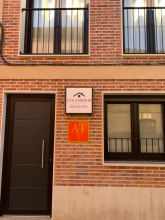
| Apartamentos Lux Carrión Booking.com |
|
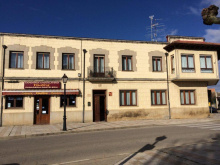
| La Abuela Maye y Me Booking.com |
|
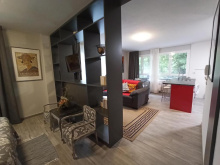
| Loft Carrión Booking.com |
|
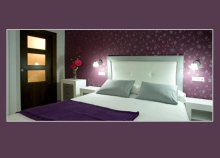
| Casa Tia Paula Booking.com |
|
| Albergue Espíritu Santo 10€ 80 |

|
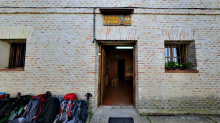
| Albergue de Peregrinos Parroquia de Santa Maria 10€ 50 |
|
| Monasterio de Santa Clara 10€ 30 |

|
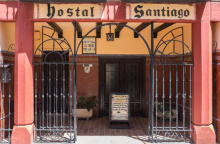
| El Edén |
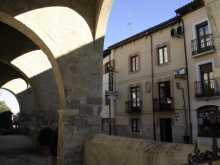
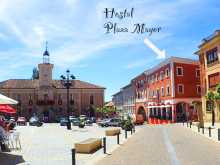
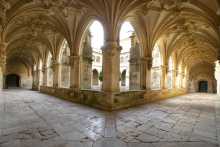

After the long exposed walk from Carrión, Calzadilla de la Cueza appears as a welcome cluster of stone houses along the road. The Iglesia de San Martín, possibly the least-visited church on the Francés, has a generous display of crosses of Santiago inside.
Los Canarios serves the most creative menu in the village. A couple of albergues and bars handle the pilgrim traffic.
Several route variants exist between here and Ledigos (6.2 km). A stone marker at the edge of town indicates the options. Most detours take you further into the hills and away from the road — they merge back to the main route before Ledigos. The terrain is open and gently rolling.
Accommodation in Calzadilla de la Cueza.
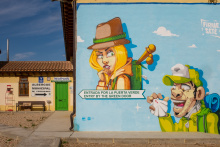
| Albergue Municipal de Calzadilla de la Cueza 8€ 34 |
|
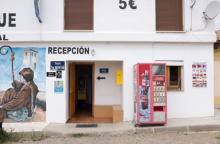
| Albergue de Peregrinos Camino Real 14€ 30 |
|
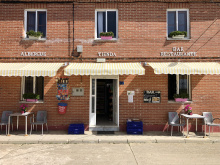
| Alojamiento Los Canarios 15-19€ 9 Booking.com |
|
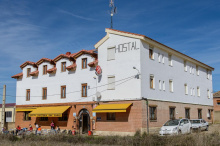

Ledigos is a small meseta village with a bar and an albergue. The Iglesia de Santiago is modest but maintains the pilgrim connection. Services are basic but sufficient for a rest stop.
The village sits in the Tierra de Campos, surrounded by wheat fields that stretch to every horizon.
Santiago is celebrated on July 25.
The camino continues along a straight track through flat farmland to Terradillos de los Templarios, about 3 km ahead.
Accommodation in Ledigos.
| El Palomar 15€ 52 Booking.com |
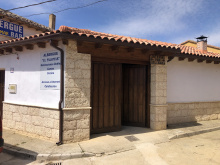
|
| Albergue La Morena 23€ 18 Booking.com |
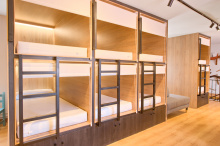
|

The name suggests a Templar connection, and the village was indeed part of a Templar commandery in the 12th century. Today it's a small farming village with a couple of albergues and a bar. The Los Templarios albergue has a decent restaurant attached.
The village marks the approximate halfway point between Saint Jean Pied de Port and Santiago de Compostela — a fact that's more psychologically significant than practically useful.
The walking to Moratinos and San Nicolás del Real Camino continues flat and exposed across the meseta. The province of León begins ahead.
Accommodation in Terradillos de los Templarios.
| Albergue Los Templarios 18€ 46 |
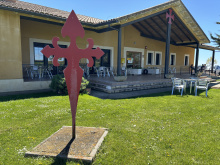
|
| Albergue Jacques de Molay 15€ 41 |
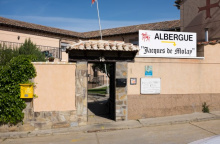
|

Moratinos has been experiencing a slow renaissance, with a few buildings rehabilitated and a growing community of international residents drawn by the quiet and the cheap property. The hillside behind the village is honeycombed with bodegas — underground wine cellars dug into the earth like hobbit holes, built to store large barrels in the cool darkness.
A bar and a casa rural provide basic services. The atmosphere is unhurried even by meseta standards.
Accommodation in Moratinos.
| Albergue de Peregrinos Hospital San Bruno 15€ 28 Booking.com |

|
| Hostal Moratinos ★★ 15€ 16 Booking.com |
|

