Ribadeo is built on a hillside rising from the estuary, which means everywhere feels uphill. It's the first town in Galicia and it makes a strong first impression.
The Convento de Santa Clara (15th century, 18th-century cloister) anchors the old center. The Torre dos Moreno, a 1910 Casa de Indianos of considerable ambition, dominates the skyline — a restoration project is underway. The Iglesia de Santa María del Campo, in the main square, is the working parish church.
If you're staying at the municipal albergue, the 3.5 km round-trip walk to the Ribadeo lighthouse at Illa Pancha is worthwhile, passing the Castillo de San Damián en route.
The real draw is 14 km west: As Catedrais (the Cathedrals), natural rock formations along the coast that rank among Galicia's top five attractions. The formations are only accessible at low tide — check the tide calendar before committing to a taxi. If you can split one with other pilgrims, don't miss it.
All services available. Note that Galician waymark shells are not oriented toward Santiago the way Asturian ones are — follow arrows, not shells.
The scallop shells in Galicia are not installed with an orientation towards Santiago and having come from Asturias where they are it might be a bit confusing. Just remember to follow the arrow and ignore the shell.
Ribadeo has had an uneven relationship with the camino. Before the bridge, the broad estuary meant a risky crossing. Many pilgrims turned south to cross at Santiago de Abres instead. The modern bridge eliminated the hazard, and since 1987 the southern option has fallen out of favor — though a local movement is working to revive it.
The camino through Ribadeo has been re-routed in recent years and now follows a route down to the waterfront and then back up. Of course, it is still possible to go the old way and avoid the elevation change. If that suits you, turn right at the first big intersection after you pass under the bridge into town. It is the Avenida de Leopoldo Calvo Sotelo and the official camino is across the road to the left. If you turn right you can follow old arrows through town. At the end of town both options rejoin on the Rúa de San Lazaro and before long you are back in the countryside. Such is the case for most of the walking through Galicia; on a few occasions you will walk along the asphalt road but they are quiet country roads. The first of them is the LU-5207 which you will dance around as you enter Vilela.
Accommodation in Ribadeo.
| O Teu Sitio Hostel 25€ Booking.com |
|
| Albergue Ribadeo A Ponte 15+€ 28 Booking.com |
|
| Albergue Viruxe 12€ 20 |
|
| Albergue El Olivo 12€ 13 |
|
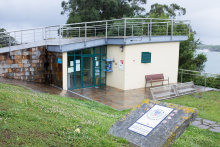
| Albergue de Ribadeo 10€ 12 |
|

Has a bar, but the hours are unpredictable. If it's closed, the only option for supplies before Villamartín Grande is a detour to San Vicente — accessible from the LU-133 without adding distance.
If the bar in Vilela is closed, the only option for buying supplies between here and Villamartín Grande is in San Vicente, a short detour from the camino described below.
Take the turn off to the right to follow a smaller road through the forest. This road follows a broad bend and eventually turns back towards the LU-133 (which was the main road in Vilela). Before the camino gets all the way to the road, it turns to the right along a path. NOTE: At this point you do have the option of continuing straight to the LU-133 where you can find a coffee in the town of San Vicente without adding any extra distance to your walk. When you get to the LU-133 turn right. At the far end of the sparsely populated village the camino turns from the north to cross over the LU-133 so you can simply follow it (about 2km) all the way to this junction. When the official camino returns to the LU-133 it does not follow it; instead it crosses to the other side and descends along a path to the next road. It then zig zags a bit as it descends via paved roads to the bridge in Arante.
Accommodation in Vilela.
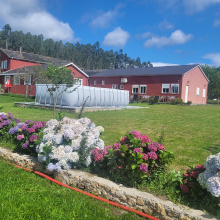
| Albergue A Pena Vilela 14€ 17 |
|
The bridge at Arante marks the low point of the day and the beginning of the terrain that defines Galicia — a relentless series of ascents and descents where level ground is a rumor. The camino turns sharply right after the bridge and climbs to the mountaintop before descending the far side into Villamartín Pequeño.
The bridge here is the low point of todays walk and from here the camino begins a series of ascents and descents which are to become the de facto terrain in Galicia where level ground is seldom to be found. After the bridge the camino turns sharply right up a path and begins a climb to the top of the mountainside. It spends little time at the top before descending the other side into Villamartín Pequeno.
The camino rejoins the road at the valley floor. Watch for the path on the right — it's easy to miss, and many pilgrims walk right past it. It marks the start of a steep climb into Villamartín Grande.
In Villamartín the camino rejoins the road at the lowest point in the valley, following it southwest for only a short distance. It is common to miss the turn off and continue some distance before noticing the mistake, so keep an eye open for the path on your right which marks the beginning of a steep climb into Villamartín Grande.
One bar in town, on the right as you reach the top. The owners are friendly and eager to help pilgrims. Beyond the bar, the camino crosses the LU-P-6103 and follows signs toward Gondán — a downhill walk on pavement.
After passing the small shop and lodging (friendly and helpful owners) the camino crosses the LU-P-6103, following the sign in the direction of Gondán; a downhill walk along a paved road.
Accommodation in Villamartín Grande.
| Tentempé Peregrino Booking.com |

|
An albergue marks the village. Turn right at the first four-way junction past it and follow back roads to San Xusto.
Turn right at the first 4 way junction past the albergue, and follow the back roads to San Xusto.
From San Xusto the camino climbs Monte Calvario before descending into Lourenzá. No services.
From San Xusto it is another climb, this time to the top of Monte Calvario before descending into the bustling town of Lourenzá.
The Benedictine Monasterio de San Salvador is the centerpiece — over a thousand years old and still the most important building in town. The entrance fee (around 3 EUR) is worthwhile. The Baroque facade, added in the 18th century, is impressive; the Romanesque interior is better. Around the back, an ornate palomar (dovecote) catches the eye.
Basic services in town. No services between here and Mondoñedo — plan accordingly.
The founding of Lourenzá is tied to the Monasterio de San Salvador, established at the end of the 10th century. The Benedictine community shaped the town that grew around it, and the monastery's Baroque renovation in the 18th century gave Lourenzá its most recognizable facade.
Last Sunday of August.
There are no services between here and Mondoñedo. From the municipal albergue, the camino leaves town along a well marked but narrow and cobbled path uphill. The path climbs to the top of this monte and joins the N-634 as it passes through the hamlet of Arroxo (just a few houses). Here it reaches the highest point along this stretch and ahead you can see the elevated A-8. Keep on the N-634 to pass underneath it and downhill to the roundabout junction where you keep to your left and abandon the N-634. A short distance ahead the camino leaves the road for a path on your right. Along it you will pass the Mondoñedo cemetery and the hamlets of San Pedro, O Reguengo, and San Paio before returning to the main road into Mondoñedo.
Accommodation in Lourenzá.
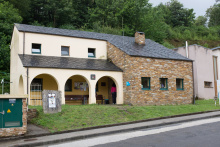
| Albergue de peregrinos de Lourenzá 10€ 20 |
|
| Albergue Savior 16+€ 23 Booking.com |
|
| Albergue Castelos - Lourenzá 15+€ 46 Booking.com |
|
| Albergue - Pensión O Pedregal 18€ |
A hamlet of a few houses where the camino joins the N-634 at the highest point of this stretch. The A-8 is visible ahead. No services.
All roads in Mondoñedo converge on the square in front of the Cathedral — which is convenient because the Cathedral is one of the essential stops on the entire Norte. The facade is deceptively plain for what lies inside: a Romanesque-Gothic interior with excellent carved capitals and a painted wooden ceiling.
The Catedral de la Asunción served as the seat of one of Galicia's historic dioceses. Its position here, in a valley rather than on the coast, reflects the medieval logic of placing important institutions where they were hardest for raiders to reach.
Coming into town you pass the Igrexa Nova; leaving, you may pass the Igrexa dos Remedios, whose Baroque interior is worth a look if it's open. The town itself is small enough to walk in an hour but handsome enough to justify two.
All services available.
The most dramatic story from Mondoñedo's archives concerns Pedro Pardo de Cela, a 15th-century nobleman who resisted the authority of the Catholic Monarchs and was sentenced to death. While he awaited execution in the Cathedral square, his wife raced to the Puente de Pasatiempo with royal letters of pardon. She was blocked by his enemies, and Pedro was beheaded. He is buried in the Cathedral. The bridge's name — the Bridge of Passing Time — carries the irony of her delay.
Os Remedios, a medieval market, is held on the first Sunday after the 8th of September.The fiesta de San Lucas is held on the 18th of October.
The camino beyond Mondoñedo is a confusing enterprise. The albergue in Lourenzá does their best to inform pilgrims but their opinions are biased and you are encouraged to consider all options, and to not give up if you can’t find the right starting point for your desired route to Gontán and then Abadin.Part of the confusion arises from the newly installed stone markers in Galicia. When they were installed the routes were re-examined by planners and several changes and additions were made. In this case, the old camino route was re-named the complementaria route, and a second route was added as the official route. This business of creating complementaria routes has led to much confusion because in some localities (Arzúa is the nearest example) the name was applied to a route (for historical reasons) which for decades has been the only option; causing many pilgrims to waste time looking for an official route which does not exist.In the case of Mondoñedo to Gontán, there are two options and both begin at the Cathedral.Option 1: The Old Camino now known as the COMPLEMENTARIA ROUTE - 15.7This route remains the preferred one by several of the hospitaleros in these parts. It is also the longer of the two options, and follows a paved road up and over the mountain. There are minimal services along the way so pack accordingly.With your back to the front of the Cathedral, turn left and exit the square. Just outside the square you will see the Fonte Vella (old fountain), turn right and at the next junction take the left most option up the Calle de la Rigueira. At the top of the hill the camino turns sharply left and follows the road through several hamlets, the first of which is Maariz.Option 2: The Official Route / La ruta principal - 11.9Though shorter, this route is both more challenging and more scenic. It can also be difficult to locate.With your back to the front of the Cathedral, look for the pharmacy that is at the top of the stairs opposite you towards the right. The camino leave town on that road so climb up the stairs and turn left up the Rúa Lence Santar. Turn right on the first side street, and follow it as it curves to the left. When it reaches a small plaza with a fountain, keep to the right. At the next intersection, turn left onto the LU-130 (the first wide road since the Cathedral). Follow the road uphill to the park, turning right at the end of the park to pass the Iglesia dos Remedios. Turn left, again uphill, after the church. This is the N-634 and you don’t follow it for long. Turn right downhill onto the LU-P-3106 in the direction of Zoñan. This road will take you through the hamlets of Rego de Cas and Cesuras. At the end of Cesuras it turns left uphill towards Infesta. A short distance ahead, after crossing the N-634, the road turns to trail and you begin the steepest part of the climb.
Accommodation in Mondoñedo.
| Albergue de peregrinos de Mondoñedo 10€ 24 |
| Albergue del Montero 20€ 38 Booking.com |

|
| Lumen Albergue 20-25€ 33 Booking.com |
| Hostal Padornelo Booking.com |

Coffee and conversation at the albergue, but little more. The camino follows the road to Lousada.
The camino follows the road to Lousada.
Accommodation in Maariz.
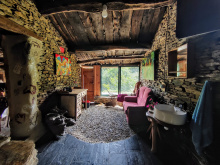
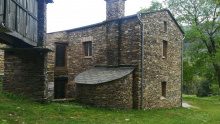
| O Bisonte de Maariz Donativo€ 6 |
|
| Albergue de la Naturaleza O Vilar 15€ 50 Booking.com |
|
At the end of the village the camino turns left for a steep descent to the A-8 and a large roundabout. It keeps north of the motorway and follows a series of roads into Gontán.
At the end of the small village the camino leaves the road. It turns left and begins a steep descent along a path. At the bottom is the A-8 and a large roundabout. The camino keeps to the north of the A-8 and follows along a series of roads into Gontán.

The two routes from Mondoñedo converge here. Gontán was once a major trading post and crossroads but has seen little growth since — it's overshadowed by nearby Abadín.
At the end of Gontán there is a small covered fountain opposite a sort of plaza/parking lot. Turn right to cross the parking lot and continue along the road on the opposite side, passing the Loran factory. This road ends at a junction, where you turn right and uphill to follow a pedestrian path up to the N-634 as it enters Abadín. Simply follow the curve of the road to the right.
Accommodation in Gontán.
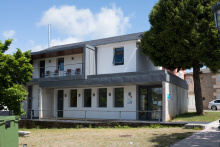
| Albergue de Gontán 10€ 26 |
|
Abadín survives on pilgrim traffic and truck traffic from the nearby interchange. It's brief — you'll pass through in minutes. From here to Santiago, your proximity to road traffic increases as the camino dances around the N-634.
Santa Maria is celebrated on the 8th of September.
At the end of the very short Abadín, the camino turns right (following the sign to the Correos) and when it reaches the Correos (post office) it turns left. The road here is paved and quiet. Keep an eye open for the grassy trail that leaves the road to your right. It descends to cross the river and eventually returns to pavement, turning left when it does. It enters the area of As Paredes after passing over the A-8.
Accommodation in Abadín.
| Albergue Xabarín 18*€ 26 Booking.com |
|
| Albergue Goás 17€ 46 |
| Pensión Casa Goás Booking.com |
|
The camino passes through As Paredes and under the A-8 into Castromaior — barely more than a few houses. Signs direct you onto a path to Martiñán, crossing beneath the A-8 yet again.
The camino passes through As Paredes along the same road/trail that you entered on and will bring you back to the A-8, this time to pass underneath it into the hamlet of Castromaior. In Castromaior (not much more than a few houses) signs for the camino direct you back onto a path to Martiñan. Along the way you will again cross beneath the A-8.
Accommodation in As Paredes - Castromaior.
| Albergue O Xistral 18*€ 20 Booking.com |
|
Turn left on the road to reach the bar. The camino crosses the N-634 here and winds along back roads, avoiding the traffic as best it can before returning to the main road at Goiriz.
The camino reaches, and crosses, the N-634 in Martiñan. It winds its way along a series of back roads, all the while avoiding the N-634 traffic as best that it can. Eventually it returns to the busy road in Goiriz.
A brief stretch along the N-634, then another turnoff onto back roads that eventually rejoin the main road for the walk into Vilalba.
Through Goiriz you will have to walk along the N-634 for a short bit. Try to keep to the right as the turn isn’t far. Again the camino keeps away from the N-634. It will eventually return to a different road and follows the heavy traffic into Vilalba, passing around one large roundabout along all the way.
Vilalba is a major traffic hub that can feel like a shock after the quiet Galician countryside. Despite its size, there's little to see — the Iglesia de Santa María is the main stop.
The Torre de los Andrade is the most recognizable building — the last remaining tower of the Andrade family castle, now absorbed into the Parador hotel chain. The rest of the castle was destroyed during the Irmandiña revolts.
Services available throughout. Mind the arrows — the streets are usually packed with cars and trucks, and waymarks can be hard to spot.
The Torre de los Andrade survived (barely) the Irmandiña revolts of the 15th century — a peasant uprising across Galicia that targeted noble fortifications. Over 130 castles were destroyed as serfs and the emerging bourgeoisie rose against a nobility attempting to reassert feudal rights during a period of economic crisis. The nobles fled to Castile, returned with reinforcements, and took revenge on the Brotherhood's leaders — but few castles were ever rebuilt.
The Festa dos Pepes is held on the 19th of March on the feast of San José. Market days are on Tuesdays and Fridays.
Mind the arrows through Vilalba. The streets here are usually jam packed with cars and trucks and they can be hard to see at times. The center of town is a jumble of roads heading in every direction. Eventually you will pick up on the natural flow of the streets and before long near the end of town. The camino winds its way around a few buildings and in the distance a Repsol gas station comes into view. Shortly before the Repsol station it leaves the road to the right. This is the end of Vilalba and it is gently rolling hills from here to San Xoan. Just before getting there you cross over the A-8 and return to the N-634.
Accommodation in Vilalba.
| Albergue de peregrinos de Vilalba 10€ 42 |
| Albergue Turístico Castelos 15€ 46 |

|
| Albergue As Pedreiras 16-17€ 27 Booking.com |
|
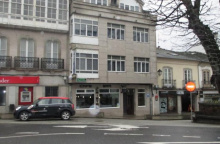
The church and adjacent cemetery, with neo-Gothic spires, are the only notable features. The camino crosses the N-634 twice here — there are no dedicated pedestrian crossings and a large junction demands alertness.
The camino through San Xoan is a bit sloppy, there are no dedicated pedestrian crossings and a large junction means you have to keep alert. Although the camino reaches town from the west side of the road, and later leaves it from the west side, the arrows have you cross over the N-634 to ease the way around a junction; this route also takes you past the church and cemetery. This dancing around the N-634 is almost to an end but there are a few more crossings before Baamonde. The camino follows a few more back roads to Pedrouzos.
A hamlet between San Xoan and Baamonde. After Pedrouzos the camino returns to its repetitive dance with the N-634 — crossing, recrossing, and passing under the A-8 multiple times.
After Pedrouzos the camino returns to, and crosses, the N-634. A short distance later it returns to repeat the crossing in the opposite direction and proceeds to pass underneath the A-8. Past two small hamlets, it reverses course and passes back under the big highway and across the small one to reach Pígara.
Accommodation in Pedrouzos.
| Pensión Casa Maragata ★★★ |
A recreation area marks the village. The camino winds around the junction where the N-634 and A-8 converge, following the N-634 for a full kilometer before turning off toward Baamonde.
Upon reaching a recreation area in Pígara the camino turns right (west) onto a road to back to the now familiar road and highway crossings. However when it reaches the N-634 for the second time if follows it a full kilometer before turning off to the left. Ahead is a large junction and the camino winds around it, avoiding the roundabouts.

The most overlooked curiosity on any camino may be the Castaño de Baamonde — a 500-year-old chestnut tree standing next to the Iglesia de Santiago, just meters from the camino. Get close and you'll discover the hollow interior has been carved into a gallery of figures by a local sculptor, Víctor Corral, who took up the project in protest when the town planned to cut the damaged tree down. His house and museum are just up the road.
Two routes lead out of Baamonde, both suitable and rejoining shortly after. A newer alternative route diverges at San Breixo — 10 km shorter than the old way through Miraz and Sobrado, but with no services. The owners of the KM111 bar in Baamonde can provide the latest details.
There are two routes to chose from when leaving Baamonde, but neither are related to a new alternative route that appears in San Breixo. Both routes from Baamonde are suitable and rejoin just out of town.
Beyond the two options out of town mentioned above, there will soon be another very important deviation when you get to San Breixo. There is a bit of controversy surrounding this option, based mostly on the opposition voiced by business and albergues along the old route. For now there appears to be a bit of an agreement that the old way will remain.
However the new way does exist and it is a full 10km shorter, a distance that tells you just how indirect the old way was. The best and most up to date description of the new way can be gotten from the owners of the KM111 bar in Baamonde.
Essentially this new option begins in A Fonte and bypasses both Miraz AND Sobrado, though there is an option along it to get back to Sobrado if you wish. The two options rejoin in Boimil. This new route is marked, but there are no services along the way.
La Virgen del Rosario de Baamonde is celebrated on the 11th of September.
There is one roundabout in the center of Baamonde, and from it you have two options. To the right is the official camino, and to the left is an alternative complementaria route. The complementaria route has the benefit of avoiding the road in favor of a trail.
Accommodation in Baamonde.
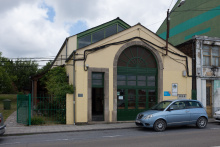
| Albergue de peregrinos de Baamonde 10€ 64 |
|
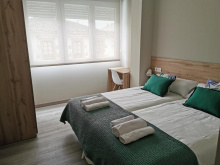
Pay close attention to the route choice in this small hamlet — arrows may have been tampered with by interested parties along the old route. Left follows the traditional camino through Miraz and Sobrado. Right takes the newer, shorter alternative directly to Boimil.
Pay close attention to the option in this small hamlet, the arrows may have been manipulated. When you reach the road you have two choices: Left along the old camino or right to follow the newer shorter option directly to Boimil. Along the official camino you will pass through the small hamlet of Digañe (no services) before arriving in Carballedo. Note that the albergue in Santa Leocadia is located just before town, along a marked road.
A hamlet on the old camino route between San Breixo and Carballedo. No services.
Also known as Aldar. No services apart from the albergue, which is located just before town along a marked road.
At the end of town the camino keeps on straight into the forest along a foot path, a shortcut to the road. When you get to the road, turn right and follow it to the two Seixóns, first the lower and then the higher.
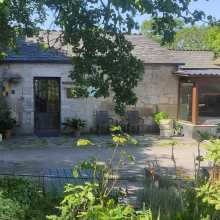
Accommodation in Santa Leocadia / Carballedo.
| Witericus hospedaxe 4 Booking.com |
|
Turn right at the junction bar and follow the road. The albergue at A Lagoa is on your left at the second junction.
In Seixón turn right at the junction (bar) and follow the road. The second junction is the place known as A Lagoa and the albergue is on your left.
An albergue marks the spot. Turn left onto the LU-P-2107, then veer right almost immediately onto the LU-P-2113 toward Miraz.
Turn left at the albergue onto the LU-P-2107, and a few meters later veer to the right along the LU-P-2113 in the direction of Miraz.
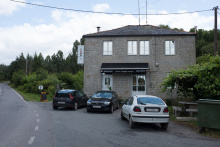
Accommodation in A Lagoa.
| Albergue A Lagoa 16€ 21 |
|
The last remaining tower and gate of the Pazo de Miraz — a 15th-century fortress, largely destroyed — greet you on the left as you arrive. The church is dedicated to Santiago. A bar operates from the Albergue Ó Abrigo.
No services between Miraz and A Roxica — plan accordingly. The camino becomes a gravel road for 3.5 km before reaching pavement, then follows the LU-P-2119 for 3.2 km to A Roxica.
There are no services between Miraz and A Roxica, several hours away. Plan accordingly.
At the west end of Miraz the camino becomes a gravel road which runs 3.5km to the next paved surface and turns left and into Braña the town with no buildings. Soon it merges with another larger road (still a country lane, the LU-P-2102). If follows this road about 600m and turns right onto another. When this road bends left the camino continues straight onto a trail. When it reaches the next paved road, the LU-P-2119, it turns right and follows it 3.2km to A Roxica.
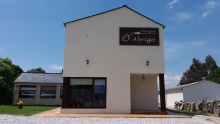
Accommodation in Miraz.
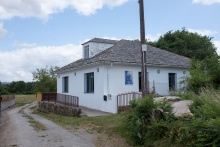
| Albergue Ó Abrigo 18€ 36 Booking.com |
|
| Albergue San Martin - Miraz Donativo€ 26 |
|
No services apart from the albergue. The camino follows the LU-P-2119 through a string of hamlets — A Cabana, Travesa, Marcela, Corteporcos — before reaching the AC-934 and eventually O Mesón.
Keep on the road through A Roxica and at the next junction, a fork with 3 forward options, keep on the road to the left. The village of A Cabana is ahead (no services). You will follow this road, still the LU-P-2119, past the hamlets of Travesa, and Marcela before turning right onto another road which winds up through the hamlet of Corteporcos. When it reaches the next main road, the somewhat busier AC-934, it turns right and follows the road straight. Along the way you pass into the province of A Coruña and through the hamlet of Marco das Pias to arrive at a junction. Follow the signs along the same road in the direction of Sobrado. The first town and bar along this road is in Meson.
Accommodation in A Roxica.
| Albergue de peregrinos de A Cabana 10€ 28 |
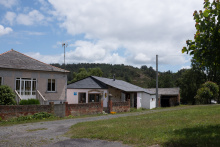
| Albergue Casa Roxica 20€ 6 |
|
The camino turns right off the AC-934 near the start of town, following quieter roads through several hamlets before returning to the main road near Sobrado.
In Mesón the camino turns right off of the AC-934, near the start of town. It follows this quieter road in the direction of the Igrexa de Roade, following along several different roads and paths before getting back to the AC-934. Look for arrows at every junction. A short distance past the Lagoa the camino leaves the road for a smaller road on the left which brings you into Sobrado.

A hamlet on the route between A Roxica and Sobrado. No services.
Sobrado is defined by its monastery. The Monasterio de Santa María de Sobrado is enormous — a complex that once rivaled the great monasteries of central Spain. Founded in 952, it passed through Benedictine and Cistercian hands, was expanded in the 12th century, had its church added at the end of the 17th century, and was stripped of its wealth in 1834 during the desamortización that dissolved Spanish monasteries. A community of monks returned in the 20th century and has been restoring it since.
The monastery can be visited and offers pilgrim accommodation. The scale of the building — particularly the church and cloister — is disproportionate to the hamlet that surrounds it, a reminder that this was once an institution of considerable power.
Basic services in the village.
The desamortización of 1834, carried out under Prime Minister Mendizábal, dissolved religious orders and confiscated their property across Spain. The process was intended to pay down national debt and break the economic power of the church. In Galicia, where monasteries had accumulated vast landholdings over centuries, the impact was devastating — buildings were abandoned, art was dispersed, and centuries of monastic archives were lost.
The camino leaves Sobrado along the AC-934. At the first small hamlet, Ponte Pedra, it leaves the road by turning left, but then turns right almost immediately to follow a smaller road. You will wind your way through the hamlets of Castro, and Madelos, before entering Corredoiras.
Accommodation in Sobrado dos Monxes.
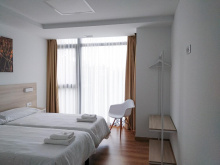
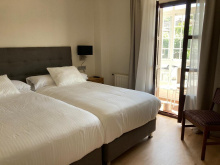
| Albergue Lecer 15€ 28 |
| Albergue de peregrinos de Sobrado dos Monxes 10€ 120 |
| Pensión Vía Sacra ⭑⭑ Booking.com |
|

A hamlet between Sobrado and Corredoiras. No services.
A hamlet between Sobrado and Corredoiras. No services.
Accommodation in Madelos.
| Albergue Rural Abeiro da Loba 18-20€ 18 Booking.com |
|
Heavy traffic — cross with caution. The camino goes straight through on the AC-234. Shortly beyond, the new route from San Breixo merges, and the Boimorto municipal albergue at A Gándara appears on a side road to the right.
Heavy traffic here. Cross with caution.
Cross straight through Corredoiras to keep on the AC-234. A short distance on the camino merges with the new route which left from San Breixo, and shortly beyond that the municipal albergue of Gandara is on your right along a side road.
The convergence point for the old and new routes. From here the camino continues to A Gándara.

Three routes from Boimorto to join the Camino Francés, all converging near the Santiago airport at San Paio. Distances from A Gándara, with remaining distance to Santiago in brackets.
New Official Route — 28.3 km [40.7]: Direct to Lavacolla. Shortest, fewest services, no albergues. Follow AC-0603.
Old Official Route via Arzúa — 35.8 km [48.2]: Longest but best-served, joining the Francés at Arzúa (9.7 km). Follow AC-0602 left at end of A Gándara.
Via Brea / O Pedrouzo — 30.5 km [42.9]: Middle option, joins the Francés near O Pedrouzo.
A hamlet on the old route to Arzúa. No services.

Arzúa is a pleasant town that sometimes runs short of beds — if everything is full, the Polideportivo (sports hall) is pressed into service. Between here and O Pedrouzo lie a string of tiny Galician hamlets of little note, connected by forest trails and soggy paths.
The locals in these parts enjoy informing pilgrims, without the slightest irony, that there are no cows in Galicia. Hold that thought as you slosh through mud on an otherwise sunny day.
Arzúa is famous for its cheese — the annual three-day Festa do Queixo in March has been running for over 40 years.
Tetilla cheese — the curiously breast-shaped Galician variety you've seen in shop windows — was reportedly shaped in protest against the Archbishop of Santiago. When the Pórtico de la Gloria was being completed, the Archbishop noticed the prophet Daniel smiling. Following Daniel's gaze across the doorway, he discovered the sculptor had been generous with Queen Esther's anatomy. Daniel kept his smile, Esther got a reduction, and Galicia got protest cheese.
Famous for its cheese, Arzúa hosts an annual (and three day long) Festival of Cheese in March. They have been doing so for 40 years. Apart from this and several other secular celbrations, Arzúa celebrates Corpus Christi, as well as Nuestra Señora del Carmen, who is celebrated on the 16th of July.
The camino leaves Arzúa along a footpath, NOT the road. If you arrived at the main square, walk past the church (with your back to the road) and turn right onto the side street. The terrain is pleasant, a blend of trails and paved roads through small towns and lots of forests. There are a few steep sections but none of any considerable length.
Accommodation in Arzúa from the Camino del Norte.
| Albergue de Arzúa 10€ 46 |
|
| Albergue Ultreia 14€ 38 Booking.com |
|
| Albergue Turistico Arzúa 14€ 18 |
|
| Albergue Los Tres Abetos 16€ 42 Booking.com |
|
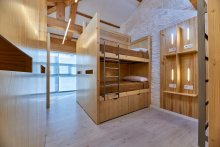
| Albergue San Francisco 16€ 26 Booking.com |
|
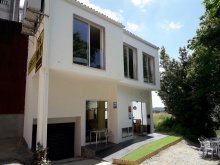
| Cruce de Camiños 16/17€ 40 Booking.com |
|
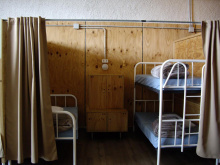
| O Albergue de Selmo 15-16€ 46 Booking.com |
|
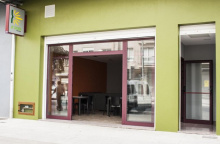
| De Camino Albergue 15€ 46 Booking.com |
|
| Albergue Los Caminantes 12€ 26 |
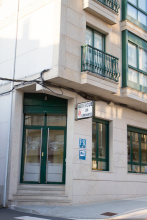
|
| Albergue Santiago Apóstol (Arzúa) 13-14€ 72 |
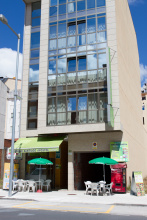
|
| Albergue Don Quijote 13€ 50 |
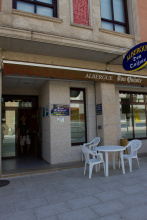
|
| Albergue Via Lactea 15€ 124 Booking.com |
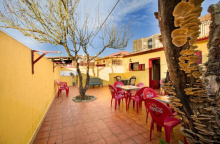
|
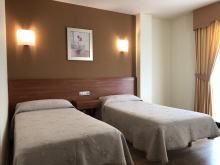
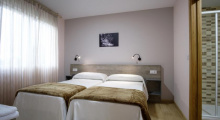
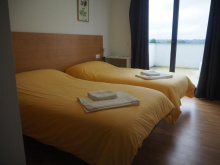
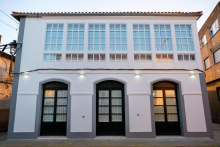

| Albergue-Pensión A Conda 15€ 8 Booking.com |
|

A hamlet on the Francés route between Arzúa and Salceda. No services.
Accommodation in Pregontoño.
| Albergue Camiño das Ocas 14€ 30 |
|
A hamlet between Arzúa and Salceda. No services.
Accommodation in El Lugar de Tabernavella.
| Albergue Taberna Vella 18€ 8 |


A hamlet on the Francés route. No services.
Accommodation in Calle - O Outeiro.
| Albergue A Ponte de Ferreiros 15€ 30 |
|
| Casa Rural do Horreo Booking.com |
|


A pair of bars and a restaurant (La Esquipa) — packed with pilgrims every day but Monday when it's closed. The camino rejoins the road here and crosses it several times between Salceda and Santiago. The speed of traffic, blind curves, and density of pilgrims make this the most dangerous stretch on the Francés. Cross carefully.
The camino rejoins the road in Salceda, and while it does not walk on the road it does remain quite close. In fact, the camino crosses the road several times between here and Santiago. The speed of traffic, the curves in the road, and the abundance of pilgrims makes this the most dangerous stretch along the camino. Cross carefully and quickly and always under the road when possible.
The camino leaves town to the right of a wedge shaped park next to La Esquipa, not along the road.
Accommodation in Salceda.
| Albergue Turistico de Salceda 17€ 8 Booking.com |
|
| Albergue Alborada 15€ 10 Booking.com |
|
| Albergue La Corona 15€ 20 |

|

A hamlet where the via Brea variant joins the Francés route. No services.
Accommodation in A Brea.
| Mar de Frisia Booking.com |
|

Several roadside bars serving truckers and pilgrims alike. Dangerous intersection at the road crossing — the crosswalk is unmarked and arrows on the far side are often hidden by parked cars.
CAUTION crossing the road, dangerous intersection.
The camino crosses the main road at the highest point in the road, there is no marked crosswalk and the arrows on the other side of the road are often obscured by parked cars. You may see pilgrims continuing along the road but are advised against following them as the camino returns to the trail when you turn off the road.Half way down the hill it splits and arrows indicate that you should either turn left to go under the road or continue straight. Unless you have reason to visit Santa Irene you can keep on straight and avoid the hassle of crossing back over the road. If you continue straight you will arrive at the important part of Santa Irene (the part with the bar).
Accommodation in Empalme.
| Albergue Andaina 14€ 14 |

A hamlet with a bar. The camino passes through on forest trails between Empalme and O Pedrouzo.
Accommodation in Santa Irene.
| Albergue de Peregrinos Santa Irene (Municipal) 10€ 36 |
|
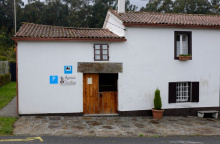
| Albergue de Peregrinos Santa Irene (Privado) 16€ 15 |
|
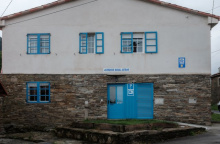
| Albergue Rural Astrar 12-14€ 20 |
|

Where the camino reaches O Pedrouzo, a barrage of arrows and hostel advertisements point in every direction. If you have a reservation, use the map board. Otherwise turn left up the road. If not staying, cross and continue along the camino.
Where the camino returns to the road at the start of O Pedrouzo you will find an abundance of arrows and a large map which is nearly worthless. Arrows and dozens of signs advertising various hostels and hotels point in every direction. If you have a reservation, review the map to find the best path, otherwise turn left up the road. If you are not staying the night in O Pedrouzo, cross the road here and continue along the camino.
Accommodation in A Rúa.
| Albergue Espíritu Xacobeo 15€ 46 Booking.com |

|
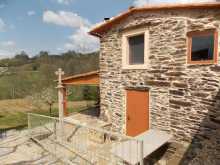
| Granja del Peregrino Booking.com |
|
| Hotel O Pino ★ | 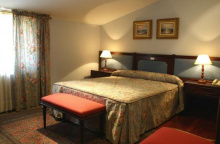
|
| Hotel Rural O Acivro Booking.com |
|
O Pedrouzo is where most pilgrims spend their penultimate night. It's a modernized town with abundant beds but no charm, no monuments, and no outrageous legends. During peak season it feels overrun. The camino proper runs through forest to the north — if you stay the night, find the Calle de Condello, head uphill, and pick up the trail.
Avoid the temptation of following the main road out of Pedrouzo. There are very few arrows to get you back to the camino and following along the road puts you in very real danger and takes you away from a lovely forest walk. See note below to get back to the camino.
If you spent the night in O Pedrouzo, it is important to find your way back to the camino proper which runs through the forest to the north. To get to it, find the intersection of the main road and Calle de Condello (where the Casa do Concello is located). Continue uphill (north from here) and in a few hundred meters the camino presents itself. Turn left and continue through the forest to Amenal.The camino between here and Santiago is a mixture of rural and urban settings, some forests and some sprawl. The up and downs that you have been experiencing continue: the elevation gain/loss is +308/-339m, a not insignificant amount.
Accommodation in O Pedrouzo.
| Albergue de Arca do Pino 10€ 120 |
|
| Albergue Porta de Santiago 12€ 54 |
|
| Albergue Mirador de Pedrouzo 15-17€ 62 Booking.com |
|
| Albergue O Trisquel 15€ 78 Booking.com |

|
| Albergue REM 13€ 40 Booking.com |
|
| Albergue Cruceiro de Pedrouzo 12-14€ 94 |
|
| Albergue Otero 14€ 34 |

|
| Albergue Edreira 13€ 40 |

|
| Albergue O Burgo 16€ 14 Booking.com |
|
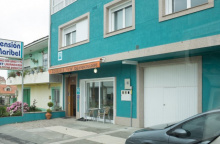
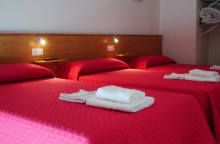
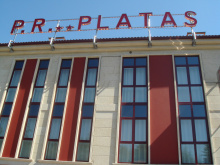

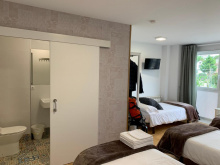
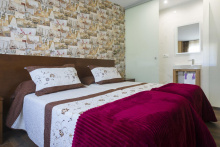
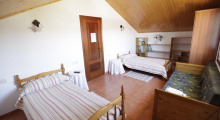
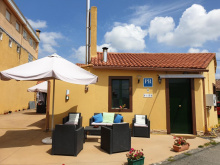


A hamlet in the forest between O Pedrouzo and Amenal. No services.
Two bars, one on either side of a dangerous crossing. The camino passes UNDER the N-547 — do not cross over the road. A steep climb follows, then a comfortable trail through eucalyptus forest alongside the Santiago airport runway.
The camino crosses the very busy N-547 by passing underneath it. Do not cross over the road.
Leaving the bar behind you climb steeply uphill a short distance. The path soon levels out on a comfortable trail surrounded by eucalyptus trees. The Santiago Airport is very near, and the camino follows a path around the runway.
Accommodation in Amenal.
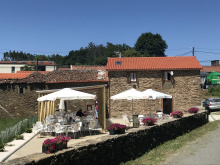
| Pensión Kilómetro 15 Booking.com |
|

A hamlet near the airport perimeter. No services.
A road junction near the airport. The camino paths around the runway converge here.
The church is dedicated to San Paio (San Pelayo), the 14-year-old saint kidnapped by invading Muslim troops, taken to Seville, and martyred — his body cast into the Río Guadalquivir. All three routes from the Norte converge near here.
The written history of San Paio has been lost to the ages, but the church here is dedicated to San Paio (or Payo), the 14 year old saint who was kidnapped by the invading Muslim troops, taken to Sevilla, and ultimately martyred to pieces and tossed into the río Guadalquivir.
Accommodation in San Paio - San Payo.

The name Lavacolla has one of the most debated etymologies on the camino, ranging from the prosaic ('field at the bottom of the hill') to the anatomically specific ('wash your scrotum'). What's widely accepted is that medieval pilgrims bathed in this river before entering Santiago.
The last hill awaits. Tradition holds that the first of your group to arrive at Monte del Gozo earns the title of King. The prize for this honor is entirely notional.
The name Lavacolla has one of the most debated origins of all the camino towns. They range from the bland “field at the bottom of the hill” to the more profane “scrub your scrotum.” What is more widely accepted is that pilgrims bathed in this river before entering the Cathedral.
If you walked down the stairs to visit either of the bars at the bottom, turn and walk up the steps towards the Iglesia de Benaval. The camino continues around to the right-hand side and down to cross the road. At the road, cross at the crosswalk and continue along the road and over the famous river (see inset below).The last hill is ahead, and if you are a stickler for doing things according to tradition you should start running now. It is said that the first of your group to arrive in Monte de Gozo is entitled to be called King. Be advised that there is no prize.
Accommodation in Lavacolla.
| Albergue Lavacolla 14€ 50 |
|
| Albergue A Fábrica 23€ 34 Booking.com |
|
| Pazo Xan Xordo Booking.com |
|
| Pensión Dorotea Booking.com |
|

A hamlet on the final approach to Santiago. No services.
Accommodation in Vilamaior.
| Albergue O Fervello 20€ 20 |
| Apartamentos Casa de Amancio Booking.com |
|
A hamlet before Monte del Gozo. No services.
Accommodation in San Marcos.
Monte de Gozo — Mount Joy — was the first place pilgrims could glimpse the Cathedral spires. A new stand of trees now blocks the view. The oversized monument commemorates Pope John Paul II's 1993 pilgrimage. The modest Capilla de San Marcos provides the last stamp, and a kiosk sells cold drinks.
Halfway across the highway bridge beyond Monte del Gozo, you enter the city of Santiago de Compostela.
You do not need to enter the complex but for the sake of curiosity, carrying on down the road will take you where you are heading.Pass the outdoor gallery of a local (and gifted) sculptor of stone and cross the bridge over the highway. It is midway over this bridge that you enter the city of Santiago de Compostela but to keep pilgrims from crossing the road half way across the bridge, the sign indicating such has been moved further into the city.
Accommodation in Monte del Gozo.
| Albergue de Monte do Gozo 10€ 400 Booking.com |
|
| Albergue Benvido Monte do Gozo 23€ 500+ Booking.com |
|


The outermost barrio of Santiago was once the limit for pilgrims affected with leprosy — they could come no closer. The Iglesia de San Lázaro marks the boundary.
The walk through the urbanized zone delivers you to the Porta do Camiño, through the stone-paved lanes, past the Plaza Cervantes, under the Bishop's residence, and into the Plaza de Obradoiro. Welcome to Santiago de Compostela.
This outermost barrio of Santiago was once the closest point that pilgrims affected with leprosy were permitted to go.
The walk into Santiago is through the urbanized zone that has grown up around the old town. After passing over the highway bridge the first part of Santiago you walk through is the Barrio San Lazaro; the church here is said to be the limit for pilgrims with leprosy. There is a fairly large intersection to cross where the arrows disappear and are replaced by blue and yellow signs on posts.At last, you will enter the old town, through the Porta do Camiño, winding gently through the stone paved lanes, through the Plaza Cervantes, under the Bishops residence, and into the Plaza de Obradoiro. Congratulations, and welcome to Santiago de Compostela!
Accommodation in Barrio San Lázaro.
| Albergue Dream in Santiago 14+€ 30 Booking.com |

|
| Residencia de Peregrinos San Lázaro 10€ 80 |
|
