Ostabat
The Vía Podiensis
Ostabat-Asme is where three of the four great French pilgrimage routes converge before the final push to Saint-Jean-Pied-de-Port and the Pyrenees. The Via Podiensis (your route from Le Puy), the Via Turonensis (from Paris), and the Via Lemovicensis (from Vezelay) all funnel together near here before merging into the Chemin de la Navarre.
The actual convergence point is at a crossroads called Gibraltar, about 7 km upstream in the commune of Uhart-Mixe. The name has nothing to do with the famous Rock -- it derives from the Basque Xibaltarre, meaning "Saviour," referring to the nearby sanctuary of Saint-Sauveur. A directional stele topped with a discoid stele (the circular funeral monument traditional in Basque cemeteries) was erected there on August 2, 1964.
In the Middle Ages, Ostabat was enormous by local standards. The 1350 fiscal census recorded 68 dwellings including about 20 inns, 2 hospitals, 3 churches, and 2 priory-hospitals -- all financed by tolls on the passing pilgrim traffic. At its height the town could reportedly house 5,000 pilgrims. The lower part of the village still preserves houses that were once medieval hostels. Today it's a quiet hamlet, but the infrastructure of those pilgrim centuries is still legible in the streetscape.
Ostabat was likely created in the 11th century under Arnaud I Garcia, lord of Mixe and Ostabarret. His possessions transferred to the Kingdom of Navarre in 1196. In 1515, Ostabat obtained the title of "town," granting legal capacities and representation to the States of Navarre.
Medieval pilgrim accounts mention the wicked toll-collectors of Ostabat -- a reminder that the Camino was always as much commercial enterprise as spiritual journey. The convergence of three routes made this one of medieval Europe's great pilgrim crossroads.
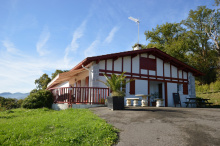
Accommodation in Ostabat.
| Gîte Aire-Ona 20€ 12 |
|
| Gîte d´étape Ospitalia 14€ 12 |
|
| Gîte d’étape Izarrak 42**€ 26 |
|
Comments