Finisterre - Fisterra
Camino to Finisterre and Muxia
Finisterre is the end of the world, and for anyone walking west, the destination that completes the pilgrimage in a way Santiago sometimes doesn't. The name comes from the Latin finis terrae -- the edge of the known earth. Pilgrimage to this point predates Santiago by centuries, rooted in pre-Christian traditions of traveling to the westernmost point of the continent to watch the sun disappear into the ocean.
From the town center, 3 km remain to the lighthouse at Cabo Finisterre. Another 29 km lead north to Muxia if you're continuing.
The tourism office, just up from the Xunta albergue, issues the Fisterrana -- the official certificate of completion. Have your stamps in order; they check.
This is a place where salty air mixes with pilgrim farewells and the particular mood that comes from reaching a genuine end point. The harbor restaurants, recently rebuilt, continue to do grilled sardines and pimientos de padron the way they always have. The port is small but active, and the fishing fleet still goes out.
A quick geography lesson: the walk to the lighthouse is actually south, not west. The beach approaching town -- Playa Langosteira -- faces east. The setting sun, and any nostalgic westward gazes, are on the other side of the peninsula, about a kilometer from the municipal albergue. If you want to watch the sunset over the Atlantic, that's where to go.
Bus service back to Santiago runs several times daily from in front of the municipal albergue. The schedule is posted at most albergues. Watch for "Enlace" on the timetable, which means a bus change en route. Taxi service is also available.
The official certificate of completion, known as the Fisterrana, can be obtained at the tourism office. You are advised to have all of your stamps in order, for they are on the lookout for anybody who might have taken the bus.
Holy Week is the biggest event in Finisterre, when thousands of Galicians descend on the village for celebrations and processions. Book accommodation well in advance if you're arriving during this time. Nuestra Senora del Carmen is celebrated from the 8th to 10th of September.
The most famous son of Finisterre is simultaneously its most obscure. Alexandre Campos Ramirez, also known as Alejandro Finisterre, was a poet and inventor born here in 1919. Injured during the Battle of Madrid at the onset of the Spanish Civil War, he was evacuated to the hospital at Montserrat. A similar injury had brought Ignatius of Loyola to the same monastery four centuries earlier, and though Alejandro didn't write his own Spiritual Exercises, he did dream up the design for the first foosball table -- reportedly inspired by watching fellow patients who could no longer play football.
Pilgrimage to this cape long predates Christianity. The Romans knew it as finis terrae and are believed to have maintained an Ara Solis -- an altar to the sun -- near the lighthouse, where they watched the sun die into the western ocean. The tradition of walking to the end of the known world, witnessing the sunset, and returning transformed is older than any saint's bones in Santiago.
TO MUXÍA: The route to Muxía has matured over the last five years, but services along the 29km stretch way remain scarce. Lires and Frixe both have bars, and Lires has a few guesthouses if you wish to split the walk into two days.To find the way to Muxía, head back along the road you came in on. At the cruceiro that marks the end of the beach stay on the road. It curves left at the cruceiro, and then curves right. Turn left (uphill) at the second street when you get to the first signs indicating the way. Between here and Muxía you will find the new markers installed in pairs and indicating the ways to Muxía and Finisterre, and you will also find double ended yellow arrows with M and F on either end.The walk is along paved road from Finisterre to San Salvador, but from there it joins a gravel trail for most of the way, only joining paved surfaces as it passes through the smaller villages.
Accommodation in Finisterre - Fisterra.
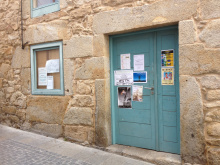
| Albergue de Peregrinos de Fisterra 10€ 26 |
|
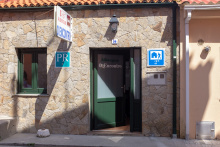
| Albergue O Encontro 17€ 5 Booking.com |
|
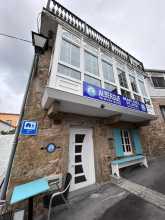
| Albergue Mar del Plata 16€ 20 Booking.com |
|
| Albergue La Espiral 15€ 14 |

|
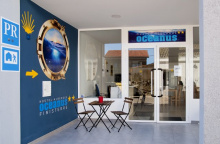
| Albergue Oceanus Finisterre 20€ 36 Booking.com |
|
| Albergue Buen Camino de Sonia 15-17€ 50 Booking.com |
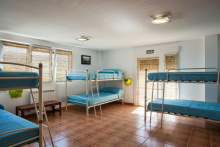
|
| Albergue Mar de Fora 18-20€ 38 Booking.com |
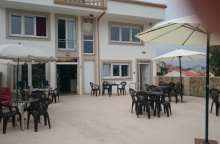
|
| Albergue Arasolis 17€ 16 |
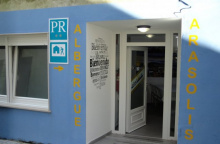
|
| Albergue Mar de Rostro 16-17€ 27 |
|
| Albergue Por Fin 18+€ 11 Booking.com |
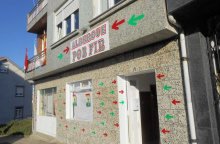
|
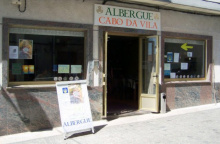
| Albergue Cabo da Vila 15€ 32 Booking.com |
|
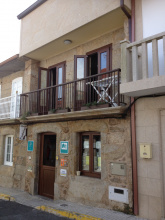
| Albergue Finistellae 14€ 20 |
|
| Albergue Fin da Terra e do Camiño 15€ 12 |
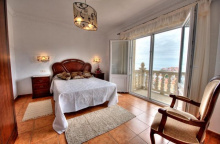
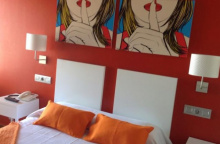
| Hostal Mariquito Booking.com |
|
Comments