Pontedeume is the first town on the Camino Inglés that truly feels like a destination. Founded in 1270 by Alfonso X, it sits where the Eume River meets the ría, and the medieval bridge that gives the town its name stretches across it. The old town is compact, cobblestoned, and easy to explore on tired feet.
All services here: bars, restaurants, shops, pharmacy, ATM. The municipal albergue sits down by the harbour — a good spot to rest and watch the water. Pontedeume has genuine character: narrow streets, good food, and a sense of history that isn't put on for tourists.
The Torreón de los Andrade — the last remnant of the once-powerful feudal family that controlled this region — is now an interpretation centre. Climb to the top for views across the estuary to Cabanas, the bridge, and the fish market below. The Iglesia de Santiago and the nearby Fragas do Eume (a pristine Atlantic forest along the river) are worth knowing about, though the forest is a detour off the Camino.
Market day in Pontedeume — check locally for the weekly schedule.
Pontedeume owes its existence to the bridge. Fernán Pérez de Andrade built the original stone bridge in the 14th century — 79 arches stretching some 850 metres across the Eume. The current bridge dates to the 1860s but follows the same crossing. The Andrade family ruled this stretch of coast for centuries, collecting tolls from everyone who crossed. Their tower still stands in town, and Fernán Pérez de Andrade's tomb lies in the Iglesia de San Francisco.
Before arriving in Miño, the Camino makes several twists and turns to navigate around the AP9 highway. The walking is hilly in places and the route can feel a bit industrial near the motorway, but you're rewarded when you reach the coast again. About 12 km to Miño.
Accommodation in Pontedeume.
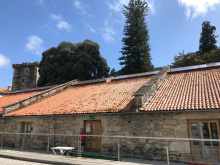
| Albergue municipal de Pontedeume 10€ 20 |
|
| Albergue Río Eume 15-17€ 20 Booking.com |

|
| Pensión Luis |
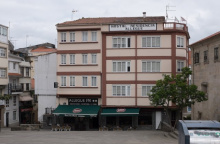
| Hotel Eumesa | 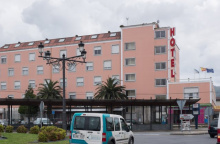
|
Comments