Tábara
Via de la Plata
Camino Sanabrés
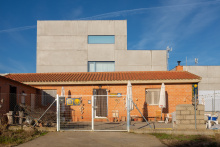
Tabara is a small town with a big history. The municipal albergue here is one of the standouts on the entire Via de la Plata -- well-maintained, welcoming, and a natural place to end a long first day from Granja de Moreruela.
The town's claim to fame is the Monasterio de San Salvador de Tabara, or more precisely, what was produced inside it. In the 10th century, the monastery's scriptorium -- housed in a tall stone tower -- was one of the most important manuscript workshops in medieval Europe. It was here that the monk Magius, and later his disciple Emeterius, created the illuminated Beatus of Tabara, a commentary on the Book of Revelation that is now held in the National Historical Archive in Madrid. The manuscript's most famous page is a miniature of the scriptorium tower itself -- the oldest known image of a scriptorium in all of medieval European art. Emeterius described it in the colophon: 'Oh high and stony tower of Tabara, the first room where Emeterius sat bent over for three months and with all his limbs brandished the pen.'
The tower still stands, attached to the Iglesia de Santa Maria. It's Mozarabic in origin and visible from a distance as you approach town. The rest of the monastery is gone, but the tower is reason enough to stop.
Beyond the albergue, Tabara has bars, a shop, a pharmacy, and a bank. It's the last town with reliable services before Santa Croya de Tera.
The Monasterio de San Salvador de Tabara was one of the great centres of manuscript production in 10th-century Spain. The scriptorium, housed in its distinctive tower, produced the Beatus of Tabara -- an illuminated commentary on the Apocalypse completed by the scribe Emeterius on 29 July 970. Emeterius had taken over the work from Magius (also known as Maius), who died before finishing the manuscript. The illustration of the tower scriptorium within the manuscript is the oldest known depiction of a scriptorium in medieval European art. The manuscript is now held in Spain's National Historical Archive in Madrid. The tower itself is Mozarabic in style and remains attached to the Iglesia de Santa Maria.
If you entered Tabara you have two options to return to the camino. You can return to the camino where you left it, or if you stayed at the municipal albergue you can follow the alternate route from there.
The camino between here and Santa Croya offers two options, both of equal length. The original and more scenic route turns right and passes through Bercianos de Valverde, however with the closure of the bar there, this route has fallen out of favour with pilgrims. It has been replaced with the left route, which heads directly towards Villanueva de las Peras.
Accommodation in Tábara.
| Albergue de peregrinos de Tábara Donativo€ 28 |
|
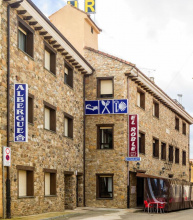
| Albergue El Roble 12€ 14 |

|
Comments