Vigo
Camino Portugues
Vigo -- from the Roman diminutive vicus, meaning small village -- has long since outgrown the name. It's now the largest city in Galicia, a remarkable rise for a place that saw little real growth until the late 19th century. When it did expand, it did so with minimal planning, and the result is a sprawling, sometimes chaotic city that nonetheless has pockets of genuine character.
The Casco Vello, the old town, is one of those pockets. Its narrow streets climb steeply from the port and are dotted with bars, restaurants, and small plazas that feel more like village squares than city spaces. These barrios are an anomaly -- small communities shoehorned into the cityscape -- and they're the best reason to walk through Vigo rather than around it.
Down at the port, the Mercado da Pedra is famous for its ostreiras -- women who sell fresh oysters from stone stalls outside the market. A plate of Galician oysters with a squeeze of lemon and a glass of albarino is one of the great simple pleasures of the Coastal route. Inside the market you'll find everything else the sea provides.
The Basilica de Santa Maria sits above the old town and is worth the climb for its baroque facade. The Castelo do Castro, a hilltop fortress turned public park, offers panoramic views over the city, the ria, and on clear days the Islas Cies -- a national park archipelago accessible by ferry in summer.
The Xunta albergue is located near the old port area but is completely unmarked. Refer to your map or app to find it.
Unlike many of the port cities to the south, Vigo didn't garner much attention during the Age of Discovery. The Vikings found it appealing, though, raiding the settlement multiple times. Francis Drake attacked in 1585, the French occupied it during the Napoleonic Wars, and the British managed to hold it for a week during one of their periodic interventions.
The most dramatic episode was the Battle of Rande in 1702, when an Anglo-Dutch fleet attacked a combined Franco-Spanish treasure fleet in the Ria de Vigo. The Spanish scuttled their own ships rather than let the gold fall into enemy hands, and treasure hunters have been searching the muddy bottom ever since. Philip IV finally built defensive walls in the mid-17th century, but peace came slowly.
The city's modern growth was driven by the cod fishing industry, followed by heavy industry -- most notably the Citroen factory that still operates on the city's outskirts. Today Vigo's port is the largest fishing port in Europe by landing weight.
Departing Vigo is a simple affair. From the Xunta albergue (or the port) follow the Ruá Areal to just beyond the train station. The camino follows the road uphill to the right, but only for a short distance as it turns left almost immediately onto Rúa Garcia Barbón. 2.5km later the camino turns right and crosses the large autopista. A short distance later it turns left and follows along the highway which is high up on the hill on your right-hand side; to your left is the estuary and you are high enough up now to have a wide view of it. When you eventually turn away from the water, you pass over the highway which tunnels beneath you. From here the camino stays inland, winding its way through the suburban hillside until it joins with the Central Way just before entering Redondela.
Accommodation in Vigo.
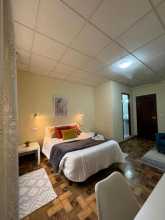
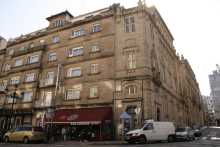
| Albergue de peregrinos de Vigo 10€ 90 |

|
| Albergue de Peregrinos O Freixo | |
| R4Hostel 17+€ Booking.com |

|

Comments