Aljucén
Via de la Plata
Aljucen is a small village that dates to the Al-Andalus period and has served travelers on this road for centuries. There's a shop, but the opening hours (10:00-14:00) make it impractical unless you time it right. Both bars do food, and they're your most reliable option.
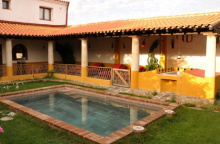
The real draw here is the Termas Aqua Libera, a reconstructed Roman bathhouse that offers pilgrims discounted entry. The baths have four spaces with three pools at different temperatures and a tepidarium between them for conversation and rest. If you're a pilgrim, they'll lend you a towel and bathing suit. After days of walking through the Extremaduran heat, soaking in waters that echo what the Romans built here is a fine way to spend an afternoon.
Aljucen's name has Arabic roots, and the village was absorbed into the lands of Merida after the Reconquista. Its position on the Via de la Plata made it a natural rest stop for merchants, soldiers, and pilgrims long before the current village took shape.
The camino follows a paved road out of town and joins the N-630 before crossing the Rio Aljucen. Once over the river, it leaves the road (before the gas station) to follow a long path through the countryside.
Along the way to Alcuescar, there are two detours. The first is to the Basilica de Santa Lucia del Trampal but it is not well signposted. From the Basilica you can simply follow the road 3 km to Alcuescar. Of course, if you are not comfortable with the trails and signage you can always walk that same road from Alcuescar to visit the 7th-century Visigothic temple. Admission is free (but closed on Mondays) and there is a small exhibition explaining the archaeological findings.
The second detour is mentioned below.
Accommodation in Aljucén.
| Albergue San Andrés 15€ 22 |
| Casa Romana Aqua Libera ⭑⭑⭑⭑ Booking.com |
|
Comments