Carcaboso
Via de la Plata
Carcaboso is a tangle of narrow streets that can be confusing to navigate. Head left along the main road from where the camino arrives for most services. The real point of interest is at the Iglesia de Santiago, where three Roman milarios (milestones) stand — from the emperors Trajan and his adopted son Hadrian, both of whom invested heavily in the roads that became the Via de la Plata.
Trajan in particular is remembered as one of Rome's great builders of public infrastructure. The milestones are a tangible reminder that the path under your feet has been a road for two thousand years.
The milarios at Carcaboso date from the early 2nd century AD, during the reigns of Trajan (98-117 AD) and Hadrian (117-138 AD). These emperors, both born in the Roman province of Hispania, were the principal promoters of the Via de la Plata as a formal Roman road. The cylindrical granite monoliths were engraved with the distance, the name of the emperor, and sometimes the name of the nearest city. Hundreds originally lined the route; those at Carcaboso are among the best-preserved survivors.
The way from Carcaboso to Ventaquemada is a return to nature with a few options along the way. The first turn to pay attention to is less than a kilometre out of town where your natural tendency is to keep on a straight path; the camino turns right at a sign for Finca Bombay (an adventure sports company, in case you're inclined to rent an e-bike). Not far beyond that turn is a split, and here both options are perfectly viable. To the left is somewhat shorter, and to the right is a trail marked H1 along the more historic path.
The two options rejoin and continue through the countryside to Ventaquemada.
Accommodation in Carcaboso.
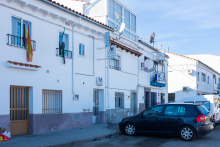
| Albergue turístico y de peregrinos Señora Elena 11€ 12 |
|
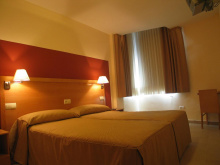
| Albergue Los Miliarios 20*€ 20 Booking.com |
Comments