Grado
Camino Primitivo
With close to 10,000 inhabitants, Grado is the first proper town since leaving Oviedo and the place to stock up on supplies. A tourist information office sits in the park at the start of town. If you want to explore, cut through the park toward the pedestrian streets to your left, where you'll pass the Capilla de los Dolores and the Iglesia Parroquial de San Pedro.
Grado is known throughout Asturias for its cheese. The Wednesday and Sunday markets are the best time to sample the local varieties, and the quality justifies the detour from the camino. The town's compact center has a pleasant, unhurried feel -- a good place to linger over a coffee before the increasingly rural walking ahead.
Beware guidebooks which erroneously place the Villapañada albergue in Grado, when it is in fact 3.5 km outside of town.
A traditional market is held every Wednesday and Sunday.
Los Indianos. In the late 19th century, during a period of severe poverty, a great many Asturians, Galicians, Cantabrians, and Basques emigrated to Central and South America. A few struck it rich, and when they returned they poured their fortunes into building elaborate manor homes and financing public works in their birth villages. These Indianos -- named for the Indias, as the Americas were called -- left a distinctive architectural legacy: eclectic, sometimes colonial-styled mansions with palm trees planted as a tribute to their tropical years abroad. The Indianos houses in Asturias are among the finest examples, and you'll spot them throughout Grado and the towns ahead. Many of the schools, hospitals, and public fountains along this route exist because an Indiano paid for them.
Leave Grado along the main road (N-634). You will pass the 18th century Fuente de Arriba, from which the people of Grado drew their water before the installation of running water, on your right. Shortly beyond a cruceiro (stone cross) on your left the camino turns left and begins climbing, first on a concrete road and then on a gravel path.
The camino emerges onto the road, turns right, and passes over a newly constructed roadway. It then passes through the hamlets of Cascayal and El Valle (a place with no buildings whatsoever, but which does have a dumpster). At the next road junction is the turn to San Juan de Villapañada.
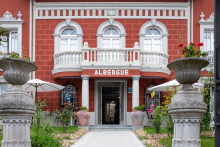
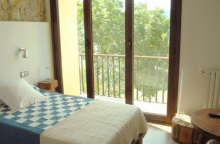
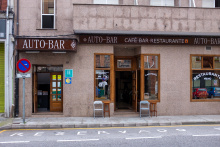
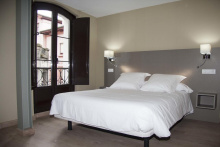
Accommodation in Grado.
| Albergue de peregrinos Villa de Grado Donativo€ 16 |

|
| Albergue La Quintana 15€ 32 |
|
Comments