Santander
Camino del Norte
Santander is the capital of Cantabria and the largest city between Bilbao and Gijón. The ferry from Somo deposits you on the Paseo de Pereda, a café-lined waterfront boulevard that serves as the city's front door. If you've been looking for a rest day, this is the place.
The Catedral de Nuestra Señora de la Asunción sits to the left of the ferry terminal — built over the site of the earlier Abbey of the Holy Bodies, which held the relics of saints Emeterio and Celedonio (from whose name, Sant Emeter, the city takes its own). The Gothic lower church is the older and more atmospheric of its two levels.
From the cathedral, cross the park and walk through the massive arch in the Banco Santander building. The Mercado del Este, a small market hall, is the next building on the right — good for a casual lunch. For a proper market experience, the Mercado de La Esperanza is better.
The Palacio de la Magdalena, the city's most emblematic building, sits on the peninsula at the far eastern end. Built by public subscription as a summer residence for Alfonso XIII, it's now a university and cultural center. The grounds are open and the views are excellent, though the palace interior requires a tour. The Playa del Sardinero, north of the palace, is the city's best beach.
All services are available. Santander has rail, bus, and ferry connections (including to the UK via Brittany Ferries). A well-connected city for arrivals and departures.
San Juan is celebrated, and bonfires are lit, on the 24th of June.Santiago is celebrated on the 25th of July. San Emeterio and San Celedonio, patrons of Santander, are celebrated on the 29th of August.The Fiestas de la Virgen de la Bien Aparecida are held on the 15th of September
The city's origin story begins in the 8th century, when the mortal remains of two Roman soldiers martyred for their Christian faith — San Emeterio and San Celedonio — were brought here by boat from North Africa for safekeeping from the Moors. The abbey built to house the relics became the nucleus around which the city grew. The Romans had already named the harbor Portus Victoriae, but it was Emeterio who gave the city its name — Sant Emeter becoming Santander through centuries of pronunciation.
The most devastating event in Santander's modern history was the great fire of February 1941, which burned for two days and destroyed much of the old city center. Fanned by south winds reaching 180 km/h, the fire left 10,000 people homeless and obliterated the medieval core. The reconstruction reshaped the city center into the wider, more modern layout you see today. Unlike the bombing of Gernika, this was a catastrophe of wind and fire, not war — though it came in the middle of the grim postwar years, making recovery painfully slow.
Between Santander and Boo de Piélagos there are two routes, the official camino and the Senda Litoral (coastal trail) that follows the coastline north of the city.The Senda Litoral starts at the ferry terminal and continues along the coast, with the water on your right, all the way around the city. The option is a great deal more scenic than the official camino and it is growing in popularity among pilgrims. At 33km it is the longer option. The official camino turns left at the ferry dock and across the adjacent city park. The path through town is clear and city walking from here to the far end of Santander. At the edge of the park turn left and follow this road; it is the Paseo de Pereda when you begin but changes names along the way. Officially it is the N-611. After passing the large university hospital complex on your left the camino goes through two large roundabouts. At the second roundabout follow the signs in the direction of the Avenida de Cajo, which will take you to the start of Peñacastillo.
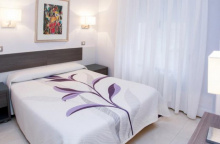
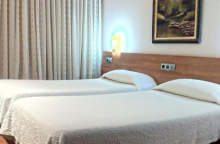
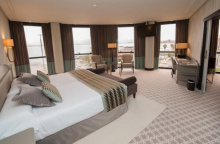
Accommodation in Santander.
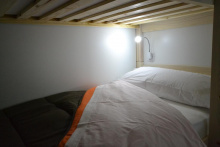
| Santander Central Hostel 23+€ 40 Booking.com |
|
| Hostel Santander 19-29€ 20 Booking.com |

|
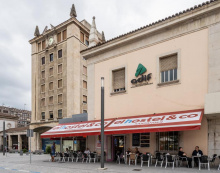
| Hostel & Co 27€ 25 Booking.com |
|
| Albergue de peregrinos Santos Mártires 15€ 50 |
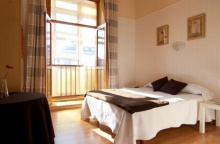
| Plaza Pombo B&B ⭑⭑⭑ Booking.com |
|

Comments