Lugo
Camino Primitivo
Lugo's Roman walls are the single most extraordinary thing you'll encounter on the Primitivo. They are the only complete Roman walls surviving anywhere in the world -- over 2 kilometers of continuous circuit, up to 15 meters tall in places, with 71 towers and 10 gates. If your feet can stand another walk, climb one of the staircases (there's one directly in front of the Cathedral) and follow the pedestrian path that runs along the top. The circuit takes about 30 minutes and gives you an elevated view of both the old town and the modern city beyond.
Inside the walls, the Cathedral of Santa Maria was begun in 1129 and took 150 years to build, mixing Romanesque and Gothic elements. The Chapel of the Virgen de los Ojos Grandes (Our Lady of the Big Eyes) is the emotional heart of the building -- the wide-eyed Romanesque virgin in her ornate Baroque chapel is one of the most beloved religious images in Galicia. The Baroque cloister, added centuries later, provides a quieter counterpoint.
The Praza do Campo and the adjacent streets form the commercial heart of the old town, full of bars, restaurants, and small shops. This being Galicia, pulpo dominates the menus -- Lugo takes its octopus seriously. The Termas Romanas, discovered during construction work, are a reminder that the Romans valued this spot for more than its defensive position.
The municipal albergue is just inside the wall, to the right of the gate where the camino enters.
There is a stretch of 10km west of Lugo without any services for pilgrims. Stock up before you leave.
During the last weeks of June, Lugo celebrates Arde Lucus (Burn Lugo). Residents dress in Roman costumes and the city relives its origins with processions, markets, and performances. The festival draws close to half a million people, so book accommodation well in advance if you're passing through. The Festa de San Froilan in October is the other major celebration -- Galicia's largest autumn festival, centered on food, music, and the saint who was bishop of Lugo in the 9th century.
The Romans established Lucus Augusti here in 13 BC, and the city's name may derive from Lugos (a Celtic god of light) or from the Latin lucus (sacred grove) -- scholars have argued both sides for centuries without resolution. The walls were built in the 3rd century AD, originally with 85 towers, and they have survived remarkably intact because the city never stopped using them. Medieval, Renaissance, and modern construction simply built up against and around them.
The walled city occupied a strategic position above three rivers -- the Mino, Rato, and Chanca -- and its prosperity lasted centuries before the city was largely abandoned in the 8th century. The slow revival that followed was fueled by the pilgrimage to Santiago, and by the Middle Ages, Lugo had regained its importance. Agriculture drove continued growth, and the city now extends far beyond anything the Romans envisioned.
The camino leaves the walled city at the gate opposite the Cathedral and proceeds downhill along the Rúa de Santiago. Halfway down the hill it bears right onto the Rúa Calzada da Ponte. It crosses a divided boulevard and descends all the way down to the río Miño.
The Ponte Romano carries you over the river and once on the other side, it turns right to follow along the river bank. After passing the Iglesia de San Lázaro it turns up to the left and follows the road to pass under the N-540. There is one more large intersection ahead and it is a simple matter of crossing straight over it. From here you will follow along the paved road, the LU-P-2901, all the way to San Román de Retorta.
Landmarks along the way include the Santuario de Santo Matías and the hamlets of Seoane de San Xoán do Alto 92.2 and Carrigueiros 90.7.
Accommodation in Lugo.
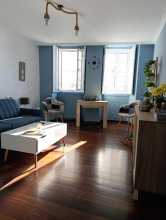
| Hostel Kilómetro 99 18-25€ 16 Booking.com |
|
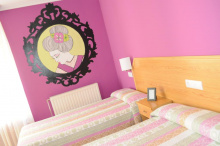
| Hostal Bríos Booking.com |
|
| Hostal Ponte Vella | |
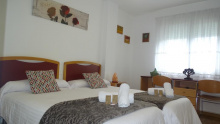
| Hostal Lucus ⭑ 20€ |
|
| Albergue Nazaret 16-22€ 40 |
|
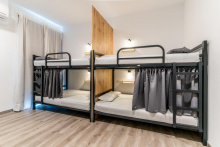
| Four Rooms Hostel 23-44€ 8 Booking.com |
|
| Shiku Hostel Booking.com |

|
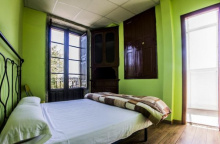
| Hostel Roots & Boots Lugo 10€ 40 Booking.com |
|
| Albergue Juvenil Lug2 9€ 75 |
|
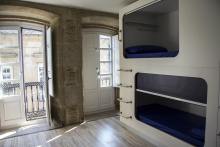
| Hostel Cross Booking.com |
|
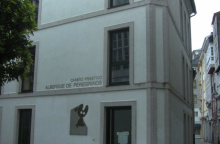
| Albergue de Lugo 10€ 42 |
|
Comments