Benavente
Via de la Plata
Benavente is the first real town since Zamora and the place to stock up on everything you need. With around 18,000 inhabitants, it's the largest settlement between Granja de Moreruela and Astorga, and the services reflect that -- supermarkets, pharmacies, banks, and a proper selection of restaurants.
The town sits at the confluence of the Esla and Orbigo rivers, a strategic position that made it a medieval crossroads. The most impressive survivor of that era is the Torre del Caracol, the surviving tower of the castle of the Counts of Benavente. The full castle was destroyed during the Peninsular War by Napoleon's troops in 1809 -- they sacked the town and burned what they couldn't carry. The tower, with its elaborate plateresque windows, now forms part of the Parador, and the views from the terrace over the river valley are worth the walk up.
The Iglesia de Santa Maria del Azogue dates to the 12th century and mixes Romanesque and Gothic elements. The name azogue derives from the Arabic word for market -- the church was built at the commercial heart of medieval Benavente. The south portal retains its Romanesque archivolts and carved capitals. Inside, the Romanesque apse with blind arcading is the highlight.
The Iglesia de San Juan del Mercado, also 12th century, is the other significant church. Its south facade carries remarkably well-preserved Romanesque sculpture, including a tympanum depicting the Adoration of the Magi.
Fiestas del Toro Enmaromado during Corpus Christi (May-June). A bull is led through the streets on a rope -- one of the oldest bull-running traditions in Spain, documented since the 13th century. The Virgen de la Vega is celebrated on the 8th of September.
Benavente's strategic position at the river junction made it a prize worth fighting over. The Counts of Benavente, one of the most powerful noble families in Castile, held the town for centuries. Their castle was legendary for its size and grandeur -- the library alone was one of the largest in 16th-century Spain.
Napoleon's forces arrived on January 1, 1809, during the British retreat to La Coruna. Sir John Moore's rearguard fought a brief delaying action here before the French overwhelmed the town. The destruction was comprehensive -- the castle was gutted, and much of the town burned. What you see today at the Parador is what survived.
Note that it is technically possible to follow the Vía Verde all of the way to Villabrázaro, but that the arrows don’t really give you a good way to find where to depart from it and resume the camino.
From the albergue in Benavente, follow the Vía Verde a short distance until the road that it is parallel to it (on your right) turns away from the path. Here the camino leaves the Vía Verde and follows the road to the right. A short distance on it turns left and follows the road out of town and all the way to Villabrázaro
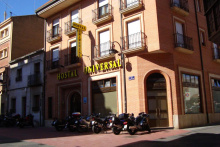
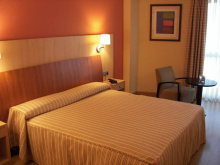
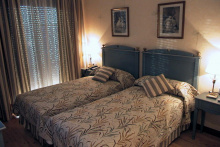
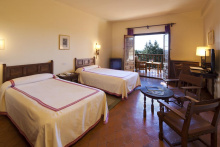
Accommodation in Benavente.
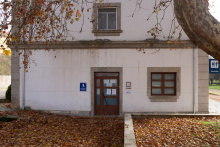
| Albergue de peregrinos de Benavente 5€ 12 |
|
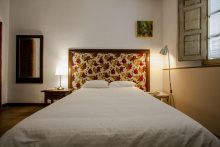
| Pensión La Trapería Booking.com |
|


Comments