Pasajes de San Juan
Camino del Norte
Pasajes de San Juan (Pasai Donibane in Basque) is one of the most unusual places on the entire Norte. The village is a single street wide, wedged between the harbor and the cliff, with houses stacked five stories tall and their balconies nearly touching overhead. There's no room for cars — everything arrives by foot or by water.
The harbor is a natural inlet so narrow and deep that it served as one of Spain's most important naval bases for centuries. The village sits on the east bank; the working port of Pasajes de San Pedro faces it on the west. A small ferry connects the two — a crossing of barely two minutes that feels like traveling between centuries.
Victor Hugo lived here in 1843, in a house on the waterfront now marked with a plaque. The fresh seafood restaurants along the quay are a strong argument for a longer stop.
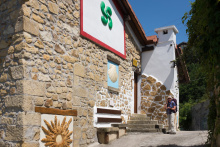
The albergue is located high up on the hillside above the village.
June: San Juan on the 24th and San Pedro on the 29th. July: The patron, San Fermín, on the 7th. Followed by Santiago on the 25th and San Pantaleón on the 27th.
The harbor of Pasajes was one of the most strategically important on the Cantabrian coast. Ships for the Spanish Armada were outfitted here. Whale oil was processed in these streets, and the fleets that sailed to the New World were supplied from this port. The harbor's natural concealment — invisible from the open sea — made it invaluable in an age of naval warfare.
Accommodation in Pasajes de San Juan.
| Hospital de peregrinos Santa Ana Donativo€ 14 |
|
Comments