Oviedo and the Start of the Camino Primitivo
Camino Primitivo
If you're starting your camino in Oviedo, leave enough time to visit the Cathedral -- it's the origin of the camino itself. This is also where you pick up your credential (pilgrim passport), which costs 2.50 euros but includes admission to the Camara Santa, the oldest part of the Cathedral. Built originally as a stronghold for relics, the Camara Santa houses the Arca Santa (Holy Chest), a 9th-century reliquary said to contain pieces of the True Cross, the Santo Sudario (a cloth tradition links to Christ's burial), and relics from various apostles and saints. The Romanesque apostle columns inside are among the finest sculpture of their era in Spain.
The greater Oviedo area holds more pre-Romanesque architecture than anywhere else in Europe. Three structures carry UNESCO World Heritage status: the Iglesia de San Julian de los Prados (9th century, with its original fresco program largely intact), Santa Maria del Naranco (originally a royal reception hall for Ramiro I, converted to a church), and San Miguel de Lillo (remains of a palatial chapel). The last two sit on Monte Naranco, about 3 kilometers from the center -- they require a small detour when leaving Oviedo but are genuinely worth the extra steps.
Closer to the center, the Monasterio de San Vicente and the adjacent Monasterio de San Pelayo anchor the city's monastic history. At the other end of the architectural timeline, Calatrava's Palacio de Congresos provides a sharp modern counterpoint.
Oviedo is cider country. The traditional pour -- the escanciado, where the bartender holds the bottle above their head and the glass at their hip to aerate the cider -- is a performance you'll see repeated in every sidreria. The Calle Gascona, known locally as the Boulevard de la Sidra, is lined with them.
Oviedo was founded in 761 by two monks, Fromestano and his uncle Maximo, who dedicated their church to San Vicente. Within twenty years it had grown into a monastery, and the settlement around it became the capital of the Kingdom of Asturias -- the only Christian stronghold to resist the Moorish conquest of Iberia.
It was in this monastery that the future King Alfonso II was born. During his reign, the remains of the Apostle Santiago were discovered in a field in Galicia. Alfonso made the pilgrimage to see them, and the mountainous path he followed between Oviedo and Santiago became the Camino Primitivo -- the Original Way, the oldest of all the pilgrimage routes to Compostela.
The saying goes: whoever goes to Santiago and not to the Salvador, visits the servant and ignores the master. The Camara Santa's relics drew pilgrims to Oviedo for centuries, and many walked from here to Santiago as Alfonso did. You're following in the footsteps of a 9th-century king.
The road out of Oviedo is notoriously confusing. To make matters worse, there are too many shells on the ground to be helpful, especially in the center. They mark several of the caminos into, and out of, Oviedo. There is no distinction between the two directions.
This is how it is done:
1. With the main facade of the Cathedral to your back, walk to the opposite end of the plaza and take the exit on the right. This is the Calle San Francisco.
2. San Francisco ends when it meets Calle de Uría (350m from Cathedral). Turn right and follow Calle de Uría. For the first 250m, the Parque de San Francisco will be on your left. Stay on this road, regardless of arrows or shells. It is about 700m long and ends at the train station.
3. At the train station, turn left along the Calle de la Independencia. Stay on the right-hand side of the road. You will pass 7 cubist looking apartment buildings before the sidewalk turns sharply back to the right. Follow the turn and cross the road towards another cluster of 4 similar buildings with a plaza in front. From here it is safe to follow the arrows.
4. At the end of the plaza is a roundabout. Cross to the left (clockwise) twice and turn left along the Calle de la Argañosa. When it turns to the left (700m) you should turn towards the right, looking out for the pedestrian bridge which crosses the train tracks.
5. The arrows from here zigzag you through new development which ends quickly. By the time you get to an urban looking track and have left Oviedo behind, you will have covered about 3.6km.
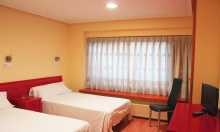
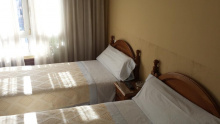
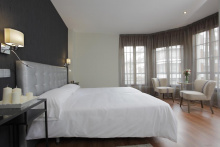
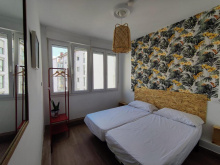
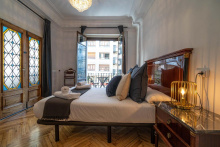
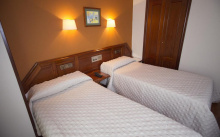
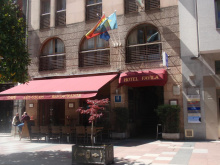
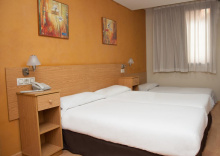
Accommodation in Oviedo and the Start of the Camino Primitivo.
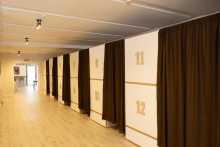
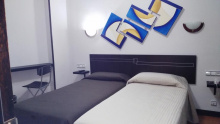
| Albergue-Hostel Gascona 27€ 24 Booking.com |
|
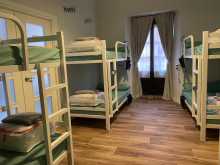
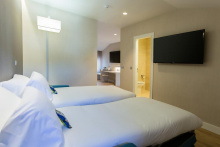
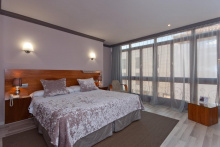
| La Hospedería Oviedo 20-25€ 10 Booking.com |
|
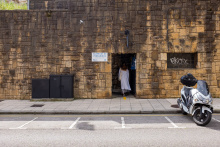
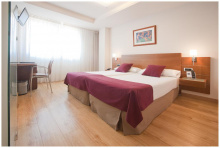
| Albergue de El Salvador de Oviedo 9€ 51 |
|
Comments