Comillas
Camino del Norte
Comillas is where Catalan architecture meets the Cantabrian coast, and the result is unlike anything else on the Norte. At the end of the 19th century, a group of Catalan architects — including Antoni Gaudí himself — were commissioned to build here, and their work transformed a whaling-and-fishing village into an architectural showcase.
El Capricho de Gaudí is the headline act — one of only a handful of buildings Gaudí designed outside Catalonia. Built as a villa in the 1880s, its ceramic sunflower façade and minaret-like tower are unmistakable. After decades of abandonment, it's now a museum. Adjacent stands the Palacio de Sobrellano, designed by Joan Martorell, a neo-Gothic palace whose chapel contains furniture designed by Gaudí. Both can be toured and neither should be skipped.
At the highest point of town, follow signs for the cemetery to find the ruins of the old parish church. When the parish feuded with the Duke, the church was abandoned, and the expanding cemetery filled the nave — a curious sight. But the real discovery is the modernist sculpture that adorns it, known as El Ángel Exterminador, by Josep Llimona.
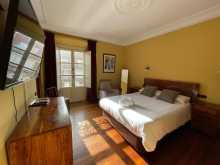
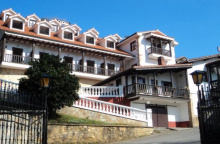
The camino cuts through the old town center but doesn't reach the beaches or the harbor. If you're staying the night, make the loop — the headland views are excellent. The Iglesia de San Cristóbal is the working parish church. Bars, restaurants, and shops serve both pilgrims and the steady tourist traffic. Multiple accommodation options.
The camino has recently changed and now follows the road north. The new route bypasses El Tejo and La Revilla and instead continues along a pedestrian path adjacent to the road. It continues to Oaymbre beach (bar) and then onward to San Vicente de la Barquera along the road.
Comillas keeps a comprehensive festival calendar, starting with the Cabalgata de Reyes Magos for winter pilgrims passing through on the 5th of January. Later in the year it celebrates Carnaval for the three weeks leading up to Semana Santa (Holy Week). Bonfires on the beach for San Juan on the 23rd of June. Later the local fiesta celebrates San Pedro on the 28th and 29th. San Cristóbal, patron of Comillas, is celebrated on the 10th of July; and less than a week later Santo Cristo del Amparo is celebrated on the 16th. And lastly, on the final weekend of August, the Día del Indiano celebrates the intrepid explorers who set out from Comillas in the mid 19th century to find their fortune in the Americas and the Philippines.
Comillas was a whaling port from the 17th to 18th centuries — the free whale was hunted to local extinction, and the men traded harpoons for sardine nets. The transformation came in the late 19th century when the first Marqués de Comillas, Antonio López y López, returned from his fortune-making in the Americas and brought Catalan architects to redesign the town. The Catalan connection — architects, sculptors, and craftsmen — was his doing, and the buildings they left behind are now protected heritage.
Gaudí built a third project in Comillas: a smoking kiosk for the palace garden, purpose-built for the visit of King Alfonso XII. It was later moved to Barcelona and has since disappeared.
The camino passes through the center of the old town, and does not go near any of the beaches in Comillas; however it is worthwhile to make the detour to visit as the views are exceptional.After passing through the old town the camino emerges onto the Calle del Marqués de Comillas at a broad park. High up on the hillside to your left is the Capricho de Gaudi and the Palace and Chapel de Sobrellano. Follow the road past these landmarks and straight through the roundabout at the end of the park. You are now in the CA-131 and 2.3km from here the camino splits.
Comments