Tavira is one of the Algarve's most attractive towns, and it's the starting point of the Caminho Nascente. The first arrow and shell can be found at the Igreja de Santiago, originally built in the late 13th century shortly after the reconquest of Tavira in 1242. It was heavily damaged in the 1755 earthquake and rebuilt, but an image of Santiago Matamouros (the Moor-slayer) still adorns the facade.
Behind the Igreja de Santiago, the Igreja de Santa Maria was also rebuilt after the earthquake but retained some earlier elements. Look for the Capela do Senhor dos Passos, a 16th-century chapel with a wooden Manueline vaulted ceiling. The vault joints have symbols carved into them, including crosses for the Order of Santiago and the Order of Christ. In the apse, there's a tombstone for seven knights of the Order of Santiago who died in the reconquest of Tavira.
Tavira has all services — accommodation at every level, restaurants, supermarkets, a train station on the Algarve line, and a bus station. The old town on both sides of the Gilão river is worth exploring, with its rooftop terraces, old bridges, and dozens of churches.
Painted yellow arrows on the ground lead from the Igreja de Santiago across the Roman bridge and out of town. The first stretch follows the edge of the Ria Formosa natural park — a vast lagoon system of salt marshes, mudflats, and barrier islands stretching along the eastern Algarve coast.
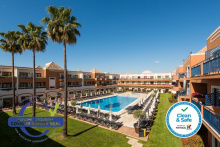
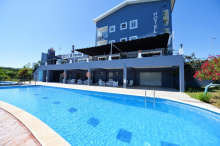
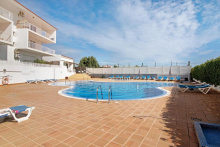
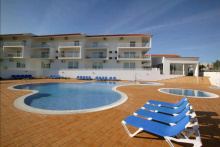
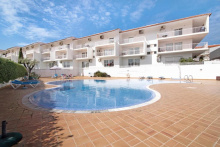
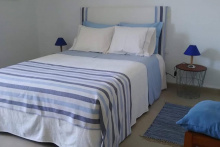
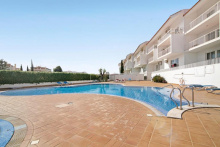
Accommodation in Tavira.
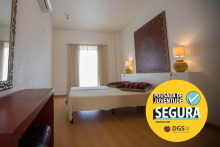
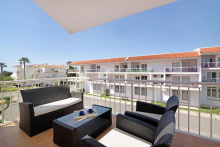
| Aguarela Tavira Booking.com |
|
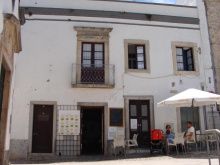
| Lagoas Booking.com |
|
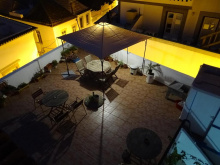
| Al-Gharb Tavira Eco GuestHouse ⭑⭑⭑ Booking.com |
|
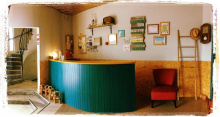
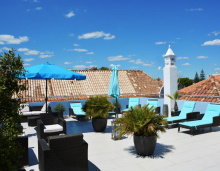
| Tavira House ⭑⭑⭑ Booking.com |
|
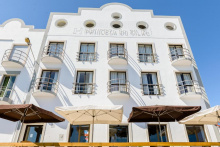
| Princesa do Gilão ⭑⭑⭑ Booking.com |
|
Comments