Galisteo
Via de la Plata
Galisteo is worth slowing down for. The town walls are among the best preserved in Extremadura — you can walk atop them, though the path is narrow and uneven enough to give anyone with wobbly legs or a fear of heights second thoughts. The walls incorporate decorative bands of river stones arranged in herringbone patterns, a distinctive local construction technique.
Inside the walls you'll find a few shops, a bank, and the Iglesia de la Asuncion near the eastern gate — an oddity for not being oriented to the east. A small bar and the albergue round out the services.
Galisteo's documented history begins in 1217, though the walls predate the first written records. The Almohads built the fortifications during their period of control, and after the Christian reconquest, the town became the capital of the Galisteo Estate, a position it held from 1229 until 1837. The Mudejar apse of the church reflects the cultural mixing that defined post-reconquest Extremadura -- Christian builders working in Islamic-influenced styles, creating something that belonged to neither tradition alone.
From the albergue return to the main road and exit town by walking uphill past the walled part of town, keeping it to your right. Arrows bring you to the Rio Jerte (1.7 km) and the Puente Romano which crosses it.
From the river, the camino climbs to a pair of roundabouts which straddle the motorway. It is paved walking to Aldeahuela del Jerte.
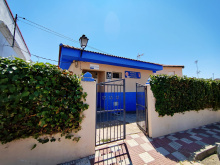
Accommodation in Galisteo.
| Albergue Turístico de Galisteo 18€ 8 |
|
Comments