| Albergue Alea Private +34 987 404 133 +34 660 416 251 15 € 18 |

|
| Albergue Guiana Private +34 987 409 327 16-17 € 50 Booking.com |

|
| Albergue de peregrinos San Nicolás de Flüe Parochial +34 987 413 381 Donativo € 186 |

|
| Hostal Nirvana ★★ Hostal +34 987 410 761 Booking.com |

|
| Hostal San Miguel Hostal +34 987 426 700 Booking.com |

|
| Hostal Río Selmo ★★ Hostal +34 987 402 665 Booking.com |

|
| Hotel El Castillo ★★★ Hotel +34 987 456 227 Booking.com |

|
| Hotel Los Templarios ★★ Hotel +34 987 411 484 Booking.com |

|
| Hotel Aroi Ponferrada ★★★★ Hotel +34 987 409 427 Booking.com |

|
| Miralmonte Casa Rural +34 987 419 475 +34 619 723 561 |
|
| Las Tres Negrillas Casa Rural +34 616 468 224 Booking.com |

|
| Polideportivo de Priaranza Polideportivo +34 987 420 806 |
| Casa Rural Las Barrancas Casa Rural +34 987 454 650 +34 987 428 550 +34 650 478 550 |
| Albergue municipal de Villavieja Manuel Fuentes Municipal +34 987 420 806 10 € 16 |

|
| Casa Rural Cornatel Casa Rural +34 619 868 122 |

|
| Casa Rural Cornatel Médulas ⭑⭑⭑ Casa Rural +34 987 420 568 Booking.com |

|
| Casa Rural Borrenes Las Médulas Casa Rural +34 987 420 568 30 € Booking.com |

|
| Hotel Rural La Peregrina Casa Rural +34 609 062 538 Booking.com |

|
| Cabañas Rurales Lares Casa Rural +34 626 108 552 Booking.com |

|
| Casa Socorro Casa Rural +34 987 422 858 |
|
| Hotel Medulio Hotel +34 987 422 833 +34 987 422 889 Booking.com |

|
| Complejo Rural Agoga Hotel +34 987 422 844 +34 699 722 488 Booking.com |

|
| Albergue de peregrinos de Puente de Domingo Flórez Municipal 8 |
|
| Hostal Restaurante La Torre Hostal +34 987 460 081 +34 987 460 589 |

|
| Hostal La Torre Hostal +34 987 460 081 Booking.com |

|
| Albergue de Peregrinos Xagoaza Xunta +34 639 921 679 10 € 20 |
|
| Polideportivo de O Barco Polideportivo +34 988 320 202 +34 988 320 772? |
|
| Pensión La Gran Tortuga Hostal +34 988 347 044 |
|
| Pensión do Lar Pension +34 988 320 980 |
|
| Pensión Aurum Valdeorras Pension +34 988 322 098 |
|
| Hostal Mayo Hostal +34 988 322 098 Booking.com |

|
| Hotel Pazo do Castro ⭑⭑⭑⭑ Hotel +34 988 347 423 Booking.com |

|
| Hotel Calzada Hotel +34 888 040 012 Booking.com |

|
| Albergue de Vilamartín Xunta +34 680 602 423 10 € |

|
| Hostal Marbella Hostal +34 988 300 025 |
| Casa Rural Pacio do Sil Casa Rural +34 988 311 346 Booking.com |

|
| Pensión Fabio Pension +34 626 876 691 |
|
| Hostal Niza Hostal +34 626 876 691 |
| Albergue de Quiroga Municipal +34 982 435 290 +34 669 812 659 10 € 150 |

|
| Casa do Parral Casa Rural +34 669 399 362 |
|
| Hostal Quiper Hostal +34 982 428 451 +34 676 110 961 |
|
| Hostal Dimar Hostal +34 669 297 760 50 € Booking.com |

|
| Albergue de A Pobra do Brollón Municipal 15-18 € 36 Booking.com |

|
| Hostal As Viñas Pension +34 982 430 124 Booking.com |

|
| Hotel Condes de Lemos ★★ Hotel Booking.com |

|
| Albergue Santiago 15 Private +34 982 195 237 17 € 50 Booking.com |

|
| Albergue Lemavo Private 15 € 16 Booking.com |

|
| Pensión Miño Pension +34 982 401 850 |
|
| Hostal MON ComeySueña Hostal +34 982 401 437 Booking.com |

|
| Hostal Medievo Hostal +34 640 070 251 Booking.com |

|
| Hostal Puente Romano Hostal +34 982 403 551 |
|
| Hotel Puente Romano Hotel +34 982 403 551 +34 982 411 167 |
|
| Hotel Ribeira Sacra ⭑⭑⭑ Hotel +34 982 411 706 Booking.com |

|
| Hotel Terra Galega Hotel +34 982 405 090 |
|
| Hotel Cardenal Hotel +34 982 090 568 Booking.com |

|
| Hotel Parador de Monforte de Lemos ⭑⭑⭑⭑ Parador +34 982 418 484 Booking.com |

|
| Albergue de peregrinos de Diomondi Municipal 10 € 34 |

|
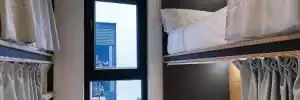
| Dpaso Hostel Private 20 € 28 Booking.com |
|
| Dpaso Hostel Private 20 € 28 Booking.com |

|
| Pensión Yoel Pension +34 982 440 294 |
|
| Hotel Mogay ⭑ Hotel +34 982 440 847 Booking.com |

|
| Hotel Vilaseco Hotel +34 982 440 847 20 € 30 Booking.com |

|
| Hostal Latiza ★ Hostal |
|
| Albergue - Pensión Carpinteiras Private +34 986 790 196 16+ € 28 Booking.com |

|
| Pensión O Guerra Pension +34 986 790 061 |
| Pensión Las Palmeras Pension +34 986 780 222 Booking.com |

|
| Hostal Caracas Hostal +34 680 176 205 Booking.com |

|
| Hotel Villanueva ⭑⭑ Hotel +34 986 780 344 Booking.com |

|
| Hotel Pontiñas ⭑⭑⭑ Hotel +34 986 787 147 Booking.com |

|
| Hotel & Spa Torre do Deza ⭑⭑⭑⭑ Hotel +34 986 787 666 Booking.com |

|
| Albergue de peregrinos de A Laxe Xunta +34 658 038 042 10 € 28 |

|
| Albergue Turístico Trasfontao Hotel Rural +34 650 261 774 Booking.com |

|
| Albergue Trabazo Private 15-17.50 € 24 Booking.com |

|
| Albergue Turístico Silleda Private +34 689 505 640 +34 986 592 001 10 € 20 Booking.com |

|
| Albergue El Gran Albergue Silleda Private +34 986 580 156 +34 615 604 393 15 € 20 |

|
| Casa Novas Hostelería Casa Rural +34 986 580 898 Booking.com |

|
| Hotel Ramos ⭑ Hotel +34 986 581 212 Booking.com |

|
| Hotel Vía Argentum ⭑⭑⭑⭑ Hotel +34 986 581 330 Booking.com |

|
| Albergue de la Xunta de Bandeira Xunta +34 670 502 356 10 € 36 |

|
| Hostal Conde Rey Hostal +34 986 585 861 Booking.com |

|
| Hotel Victorino ⭑ Hotel +34 986 585 330 Booking.com |

|
| Albergue Casa Leiras 1866 Private +34 620 483 603 +34 634 613 690 15 € 10 |

|
| Albergue-Pensión O Cruceiro da Ulla Private +34 981 512 099 16 € 18 |

|
| Albergue de peregrinos de Outeiro Xunta +34 630 941 288 10 € 32 |

|
| Pazo de Galegos Hotel +34 981 512 217 Booking.com |

|
| Hotel Rural Casa de Casal Hotel +34 981 503 227 Booking.com |

|
| Albergue Reina Lupa Private +34 981 511 803 +34 679 842 829 15 € 14 |

|





The bridge over the river at Quereño marks your arrival in Galicia — specifically in the province of Ourense. The landscape changes noticeably: the dry Bierzo gives way to the green, river-carved valleys of the Río Sil. The microclimate along the river is mild and sunny, which is exactly why this route was favored in winter — pilgrims could avoid the snow and ice of the mountains at O Cebreiro.
Quereño is the first village in Galicia. It's a curious place with an abundance of arrows in various colors pointing in different directions — some left over from construction work. Don't overthink it; the camino route becomes clear once you're through town.
No notable services.
As you complete the U-shaped loop near the railway tracks, make a relatively sharp right turn to go uphill and cross the tracks. The camino weaves a bit, crossing over the tracks (putting you between the tracks and the river) and then crossing back about a kilometer later.
From here, the camino keeps to the right bank of the Río Sil, paralleling the railway. This is the stretch the Invierno is known for — a riverine microclimate with sunny exposures that avoids freezing temperatures. Look for two picnic tables with river views. Ignore any old arrows on the other side of the tracks.

Pumares is a tiny hamlet with well-cared-for houses and what seems like dozens of cats. There's a natural spring fountain with cold, tasty water. No services.
Between Pumares and Sobradelo, you'll pass through Nogueiras, an abandoned village now mostly in ruins. Some welcoming signs and a statue of Mary have been placed there.
On the way from Pumares to Sobradelo, you'll walk for a long time on a high path with shale cliffs and wildflowers on one side and a long drop to treetops, railway tracks, and the Río Sil on the other. The path is wide and shouldn't cause anxiety except for those with extreme issues with heights.
Arrows may disappear coming into Sobradelo. Enter town on Camino Regueiros de Aguas.

Nogueiras is an abandoned village along the railway track — mostly ruins now. The camino passes through on the way between Pumares and Sobradelo. It's atmospheric in a melancholy way, a reminder of the rural depopulation that has hollowed out so many Galician villages.

Sobradelo is built on a steep hill and is the first village with real services since entering Galicia. It has pharmacies, shops, a train station, bars, banks, a health center, and a swimming pool.
The Centro Social Pontenova has a bar open to the public with a nice eating area out back and a good menú del día. On the 10th of each month (market day), the centro serves a special pulpo meal.
Bar Mar is just down the road — the owner, Manuel Ángel Martínez Ramos (tel. 988 335 106), offers lodging for pilgrims at about 8 euros for 12 beds in 4 rooms. Reviews are mixed.
If you walk down to the river, a 16th-century seven-arched bridge crosses the Río Sil. The Restaurante Museo on the other side has excellent food and a fine view of the bridge.
Whichever branch of Calle de Éntoma you take through town, you'll ascend to the OU-0801 road heading to O Barco. After a few kilometers on the road shoulder, a camino marker takes you off the highway onto more scenic forest trails.

Éntoma is a pretty hamlet with a striking metal sculpture made from agricultural hoes bidding pilgrims a Buen Camino. There's a beautiful old bridge, perfect for a rest stop. Bar Martillo has a terrace (reportedly opens at noon, closed Mondays).
The parish records of Éntoma contain a poignant entry: on May 21, 1806, a woman of humble origin from Santa Marina del Rey in León province gave birth here. She was baptized in the local church and described as a pilgrim on her way home from Santiago.
Leaving the hamlet, the camino takes you up through a forest of pine, chestnut, and cherry trees, with some vineyards. You'll arrive on O Barco's outskirts and back on the OU-0801. It's at least half an hour into the center, with development stretched along the highway.
Watch for two blue Camino signs and a mojón indicating a narrow tunnel to your left, under the train tracks. After the tunnel, enter the slate mill and turn right on a gravel track. O Barco is near — up a sharp climb and over another train tunnel.

O Barco de Valdeorras has all the services you could want, and the local wine is remarkably good. It's a long, narrow town strung out along the Río Sil, with plenty of hostals and pensiones.
O Barco is the center of the Valdeorras DO wine region. The local Mencía (red) and Godello (white) wines are among the best values in Galicia — every bar in town pours them proudly at bargain prices. Sample both.
Recommended places to eat: Casa Galaica on Avenida Eulogio Fernández has a great menú. Casa Paradelo (Rúa Xirimil, back street near the station) has a nice garden. Asador Viloira is a pensión and restaurant across the first pedestrian bridge. Bar San Roque is reported as very pilgrim-friendly.
The riverside park is the town's social hub — in summer, kids go tubing through a small whitewater section, and families congregate around the cafés and playgrounds. If you want to unwind, this is the place.
The albergue of Xagoaza is not in O Barco but rather 3.5 km north of town. Contact Gloria at 639 921 679 to arrange your stay.
Leave O Barco on the river walk. After passing the cafés, parks, and playgrounds, cross a small wooden footbridge over a tributary (not the river itself). After the sanitary plant, a mojón takes you off the path. At the roundabout, turn left. Walk straight, cross the tracks, and continue on an access road parallel to the highway all the way into Arcos.
Accommodation in O Barco de Valdeorras.
| Albergue de Peregrinos Xagoaza 10€ 20 |
| Polideportivo de O Barco |

| Pensión do Lar |

This route was the original camino before the riverside route was marked. Take it only if you plan to stay at the albergue in Xagoaza, which is highly recommended by many pilgrims.
From O Barco, make your way to the railroad underpass at the end of Calle Eulogio Fernández. At the roundabout past the Repsol station, turn left onto Rúa Estrada. At the modern Iglesia de San Tirso, turn right, go through a narrow tunnel, and watch for a marker pointing up to Xagoaza. Pay attention — arrows for the turn are scarce.
Albergue Xagoaza has two rooms with 5 bunks each, a large dining room with fireplace, two PCs and wifi, a fully furnished kitchen, clean bathrooms, and outside space. The hospitalera may provide meals, but bring food from O Barco just in case.
Coming down from the albergue, you'll rejoin the camino where it becomes an earthen path. Continue straight ahead — the path may be overgrown depending on the season. You'll arrive back on the road and continue to Arcos.
Arcos is a small village where you can see the Hotel Paladium complex on the hill above. Before Vilamartín, the Pensión Restaurante A Lastra is on the highway (tel. 988 300 232) — not directly on the camino but not far.
Continue on the camino following the N-120 and train tracks, parallel to the river all the way to Vilamartín.
Accommodation in Arcos.
| Hotel Calzada Booking.com |

|
Vilamartín de Valdeorras has restaurants, hostals, and a municipal albergue along the river — the second-to-last building on the Sil waterfront, near a small football field and swimming pool. It can be hard to find as there are no signs from the camino side.
Hostal-Restaurante Marbella (Calle Cervantes 32, tel. 988 300 025) has reported pilgrim prices around 15 euros. Hostal Restaurante Pancho y Pilar (tel. 988 300 073) is on the main street. Cafetería El Castillo (50 m off camino, under the road bridge) has a nice covered terrace.
To reach the town center, turn right at the little bridge underpass at the entrance.
Vilamartín's parish archives record that in 1712, a peregrina on her way to Santiago died and was buried beneath the "Puertas del Sol" at the Iglesia de San Jorge. The note says that because she was poor, there was no charge for burial. Though she gave her name as Isabel, the author couldn't understand her surname, noting only that she was from Navarra.
The camino continues along the riverside, past the dam and spillway of the Embalse de Santiago, with views over vineyards, bee boxes, quarries, and circling birds of prey. At the dam, cross the railway tracks and go left on the N-536. At the intersection with the N-120, a sign points left into A Rúa.
On the descent into town, Panadería/Cafetería Peyma has been recommended for breakfast. At the entrance to A Rúa, an arrow points right for the camino. Going straight takes you into the town center.
Accommodation in Vilamartín de Valdeorras.
| Albergue de Vilamartín 10€ |

|

A Rúa de Valdeorras has all services — restaurants, markets, wineries, accommodation, and a tourist office with sello, often staffed by local Camino Amigos group members. Stock up here for the next day's walk.
The municipal polideportivo in the riverside Agullón park is currently available for pilgrims. It's 1 km from the town hall — on weekdays, go directly between 3 and 10 pm; on weekends, call the local police at 696 91 75 94. Bar O Refuxio next door is recommended for its BBQ.
Hotel and restaurant O Pillabán (Praza Enriqueta Casanova 11, tel. 988 311 416 / WhatsApp 627 89 10 04) is right on the camino near the church. Rooms for pilgrims are 20 euros, and the food is highly rated.
Casa Rural Pacio do Sil (Calle Xestal 33) is outside the main town — a bit pricey but well worth it. For food, Bar Taxi, Restaurante A Lareira, and Bar Pepa near the ayuntamiento are all recommended. On Sundays and on the 7th of each month, Amalia sets up her pulpo stall outside Bar Bravo.
From A Rúa to Quiroga there are not many services. Carry extra water and food. Fountains have been reported just past Alvaredos, at Montefurado, and two in Bendilló.
Leave A Rúa by climbing Calle Currelada to the church of Our Lady of Fátima (look for the slate-roofed twin towers). Head for the N-120 — arrows take you right and beneath the highway. Upon leaving the tunnel, make an immediate left.
There are now 7 km of asphalt walking on the OU-933 (becoming the LU-933 as you cross into Lugo province). There's virtually no traffic. On a clear day, the walk above the Río Sil is exceptionally beautiful.
Accommodation in A Rúa de Valdeorras.
| Casa da Solaina |

Alvaredos is a small town just beyond the provincial border between Ourense and Lugo. This is where the Ribeira Sacra — the Holy River Bank region — begins. The name may derive from the sacred oaks that were once abundant here, venerated by Celtic tribes.
Keep a sharp lookout for waymarks — they lead back to the LU-933. About 2 km beyond Alvaredos, a medieval cart track begins a long switchback ascent and descent through forests and vineyards to the valley bottom, where an arroyo meets the railway track and the Río Sil.
The ascent on the medieval cart track is steep but beautiful. At the valley bottom, in a farmstead called El Molino, the 92-year-old Casimiro lives — he operated the gristmill here until grain production stopped in the 1960s. He's a spinner of tales and purveyor of homemade orujo, and he welcomes visits from pilgrims.
Follow the river, keeping an eye out for the many beekeeping complexes that have populated this valley for two millennia. Around a bend, the camino enters Montefurado.

Montefurado is a testament to glories long past. Twenty people live here now, but the monumental 18th-century Iglesia de San Miguel was built for hundreds. The village was once a crossroads for carters carrying ore, honey, wine, and vines throughout Spain.
Further along the river valley, you can see evidence of 2nd-century Roman ingenuity: the miners shifted the entire course of the Río Sil in their search for gold, blasting a hole through the riverside rock face. The village is built atop a maze of ancient tunnels, now used for storing wine and cheese.
There's a fountain next to the church and a Centro Social nearby where you may be able to get a drink. Montefurado has a train station with one morning train to A Rúa and one late-afternoon return.
A waymarked trail leads out of Montefurado along a green path upward. If bad weather makes the path difficult, there's a car access road from Montefurado to the LU-933 that also takes you uphill to Hermidón. A large portion of the walk to Bendilló has been taken off-road through forested areas.
The daily trains between A Rúa and Quiroga (stopping at Montefurado) can be useful for splitting stages — catching the 18:14 train back to A Rúa after walking to Montefurado, then taking the 10:03 train the next morning to continue.

Hermidón is a tiny hamlet between Montefurado and Bendilló. No services. The camino passes through on forest paths above the Río Sil. The landscape is increasingly beautiful — wooded valleys, terraced hillsides, and the constant sound of water.

The Capela das Farrapas is a small roadside chapel near the entrance to Bendilló. It sits alongside a community olive press. No services — this is a landmark on the trail rather than a settlement.

Bendilló is a small village with two fountains — one at the entrance and another in front of the church. No other services. The village is still 1.5 km from the camino entrance to the church.
As you enter Bendilló, you'll see the community olive press and the Ermita das Farrapas. Turn right and go up through the village, then down steeply on a dirt track toward the N-120.
When you reach the highway, the arrows point you up a steep hill alongside the road. If you ignore that arrow and simply cross and walk along the highway, you'll enter Soldón at an earlier point. Following the arrows avoids highway walking — when you descend near Soldón, you can either backtrack left to find older arrows into town or follow newer arrows that continue along the road briefly before entering Soldón.
This waypoint marks the steep descent from the Bendilló area toward the N-120 highway. The path drops through forest to the valley floor. After reaching the highway, the camino continues to Soldón.
Soldón sits at the river's edge. A riverside café or chiringüito under the elevated highway has seasonal hours — in high season it's open into the night, making it a great spot for a snack, cold drink, and a swim.
The tourist apartments El Molino de Soldón at the river's edge now offer pilgrim lodging — 40 euros for two (same for one), with towels, sheets, and breakfast. Full kitchen available. Additional pilgrims 15 euros. Tel. 679 455 126. With one day's notice, they'll do grocery shopping for you. The village is essentially deserted, so it may not suit everyone.
Cross the bridge over the river, then turn left and keep straight. At the next fork, go right and up to the highway (left goes down to the river). Walk on the left grassy shoulder of the N-120 briefly before a marker takes you off toward Sequeiros.
The camino passes through Sequeiros and continues to the castle of Torrenovas — built by the Military Order of St. John of Jerusalem in the 14th century. In the plaza with the castle in front, turn right (counterintuitive, as you can see Quiroga ahead). A lovely grass path descends through green thickets, through Caspedro, and eventually onto the LU-933 into Quiroga.

Sequeiros is a small hamlet between Soldón and Quiroga. No services. The castle of Torrenovas is nearby — a 14th-century fortification built by the Knights Hospitaller that once served as a strategic lookout over the Río Sil and housed pilgrim hospitals.

Novais is a tiny hamlet on the descent toward Quiroga. No services. The camino passes through on quiet paths and lanes between Sequeiros and Caspedro.

Caspedro is a small hamlet on the final approach to Quiroga. No services. A turn-off here leads to the monumental complex of Quiroga's pilgrim hospital — the Romanesque church of San Salvador and associated 16th-century buildings. The detour appears to be 1-2 km from the camino.

In Caspedro, a turn-off leads to the monumental complex of Quiroga's pilgrim hospital. The old pilgrimage path went to the important Romanesque Iglesia de San Salvador. Other monuments at the site include the Casa de los Caballeros (House of the Knights), a 16th-century manor house, and the Torre Casa Hospital, also from the 16th century. The detour is short and worth it if you have the time.

Quiroga sits in a beautiful valley of vineyards and orchards, and it has all services. It's the most substantial town between A Rúa and Monforte de Lemos.
Restaurante Aroza, off the main street near the Plaza Mayor, gets consistently high praise — the menú del día with good wine included is a bargain, and the tapas are excellent. Closed Sunday evenings. Panadería Marisa opposite the albergue opens at 8am for breakfast.
Your choice for the next stage is either A Pobra do Brollón (23 km) or the full stretch to Monforte de Lemos (35 km).
Bring water for the next stretch. There are two fountains before A Pobra — one in Carballo do Lor and another in Castroncelos. Services are scarce between Quiroga and Monforte.
Leave Quiroga following the waymarks west along the main street. Cross under the N-120 and follow the LU-933 along the river. The arrows take you across the river on a bridge — cross it to go through San Clodio (which has a bar that opens early and the Quiroga train station), or continue straight to bypass it.
After several kilometers on the N-120, cross the highway at a mojón. The path rises over Noceda. After an ascent, an arrow takes you off onto a dirt track. At the top, the camino merges with the PR-G141 hiking trail. There's a lovely descent through old-growth forest and along streams. At the intersection of several dirt roads, pass the Capela dos Remedios and continue straight (the PR trail diverges left).
Accommodation in Quiroga.
| Albergue de Quiroga 10€ 150 |

|

Espandariz is a small hamlet on the road between Quiroga and Noceda. No services. The camino passes through after leaving Quiroga and following the LU-933 along the river valley.
If you crossed the bridge to visit San Clodio (which has a bar that opens early and the Quiroga train station), you'll rejoin the main route here.

Noceda is a tiny hamlet on the hillside above the Río Sil valley. No services. The camino ascends through Noceda before continuing into forested highlands.
The views back over the river valley from the ascent are worth a pause.
After passing through Noceda, the camino continues to climb on a dirt track. At the top, it merges with the PR-G141 hiking trail. There's a lovely descent through old-growth forest and along streams, eventually reaching the Capela dos Remedios.


The Capela dos Remedios sits at the intersection of several dirt roads in the forest. It's a quiet spot with no services — just the chapel and a junction. The PR-G141 hiking trail diverges here to the left; the camino continues straight.
Carballo de Lor is a small hamlet with a fountain — one of only two reliable water sources between Quiroga and A Pobra do Brollón. No other services. Fill up here.
The camino continues on quiet paths and lanes through the valley of the Río Lor toward Barxa do Lor.
Barxa do Lor (also marked as A Ponte on some maps) is a small village at the bridge over the Río Lor. A sign in A Ponte illustrates the route onward to Monforte. No services.
Multiple paths converge in this area, and although most will eventually lead you to Castroncelos, only one is well marked. Shortly after crossing the bridge, a trail splits off to the right — don't take it. Head upward on the wider road instead. It takes several turns, and you'll feel like you're going the wrong direction as it zigzags, but it straightens out eventually, with the N-120 visible below to your left.
Ignore all signs for the GR-8.

Castroncelos is a small hamlet with a fountain — the second of two water sources between Quiroga and A Pobra do Brollón. No other services. The village sits on the approach to A Pobra.

A Pobra do Brollón is the only town with real services between Quiroga and Monforte de Lemos. If you don't want to walk the full 35 km from Quiroga to Monforte, this is the logical stopping point at roughly the midway mark.
Hostal As Vilas has closed, but there are alternatives. The polideportivo may be available for pilgrims. In Salcedo, about 3.5 km off the camino, several casas rurales and a hotel operate under one management (tel. 982 430 501 / 619 813 834). The owner is happy to pick up and drop off pilgrims at no charge. You can reach Salcedo via a marked trail from Barxa do Lor or a turn-off near Castroncelos.
The town has built a small swimming area by damming the river — it's the local gathering spot in summer, and even if you don't swim, it's worth a look.
Café Bar Restaurante Avenida, right on the camino, is recommended.
The mojón taking you out of town is next to the large Guardia Civil building with its "Todo por la Patria" motto. You're soon on a green track that emerges onto a road paralleling the river — turn right and walk along it.
You'll enter Cereixa, cross a bridge, and pass through the hamlet to a crucifix and church. The camino then turns right toward Rairos. There's one more short ascent before Monforte, through a pine forest. The descent is on a wide dirt road.
When you cross a channel, the road improves. You'll descend into Reigada, the last hamlet before Monforte. The final stretch into town on a dirt path can be badly waterlogged even in dry weather. If mud makes it impassable, backtrack to the road and turn left — this older route passes the train station and takes you into town.
You'll arrive on the Rúa Escultor Francisco Moure in central Monforte, where bars and restaurants line the street. The camino leaves Monforte via the Puente Romano.

Cereixa is a small hamlet between A Pobra do Brollón and Monforte. There's a bar a short distance off the camino to your left, near the church.

Reigada is the last hamlet before Monforte de Lemos. No services. From here, the camino descends into the city on agricultural roads and tracks.
Monforte de Lemos is the largest town on the Invierno between Ponferrada and Santiago, and it has all services. It's an elegant place, built around the confluence of the Río Cabe and a hilltop monastery complex that dominates the skyline.
The Colegio Nuestra Señora de la Antigua (known locally as the Colegio de los Escolapios) is the main attraction — an austere Renaissance monastery that now houses a school. Tours of the rest of the complex are 3 euros, at noon and 4 pm Tuesday through Saturday. The small art gallery has two paintings by El Greco, and the dome of the church is breathtaking after days of wide-open sky. The railway museum (MUFERGA) is also worth a visit. The tourist office is closed on Mondays.
For accommodation, there are many options. Hostal Duquesa (Duquesa de Alba 50, tel. 982 403 467) has been recommended — 17 euros for a room with bath. Hotel Condes de Lemos (Praza da Estación 2, tel. 982 400 319) is further from the center. Hostal Rúa (Roberto Baamonde 30), Hotel El Castillo (Huertas 36, tel. 982 402 150), and Hotel Terra Gallega (Chantada 218, tel. 982 405 090) are also options. The municipal sports hall may be available for pilgrims (floor space and showers only, tel. 982 402 501).
For food, Restaurante Cardenal on the main pedestrian street gets high marks. O Grelo, up on the hill near the parador, serves excellent food (not cheap). Al Portal and Restaurante Polar in the center are recommended. Café Chokolat on Rúa do Comercio opens early for breakfast.
There's a laundromat on Rúa Chantada (the road over the Puente Romano), just before the Lidl and Gadis supermarkets, opposite the Mapfre insurance offices at the traffic lights.
Stock up on food and water here. The next 29 km to Chantada have very little in the way of services. Between here and Chantada, your only accommodation options are casas rurales: La Rectoral de Castillón (tel. 982 455 415, about 10 km out — the owners will pick up pilgrims from the camino), Torre Vilariño (tel. 982 452 260, about 14 km out), and a casa rural in Castrotañe. Phone ahead to reserve.
Cross the Puente Romano and make an immediate left at the monastery of the Clarisas. Go right at the old town hall plaza — you'll see a shell set into the pavement. Follow Rúa Abeledos to the edge of town, passing an unmarked bakery on the left. Where two roads branch left (Rúa O Saviñao and Poeta Manuel María), take the latter. Walk between the church of San Antonio and the back of the Gadis supermarket to reach a roundabout with a hórreo. Turn left to another roundabout — a pilgrim statue points toward A Vide. Pass the 24-hour Repsol station on the right.
The next stretch is one of the few sections on asphalt with no soft shoulder.

A Vide is a small hamlet on the road out of Monforte. No services. The asphalt stretch from Monforte ends here as the camino begins moving into the rural heartland of the Ribeira Sacra.
The camino is well marked leaving A Vide, and off-road alternatives have been closed. Stay on the asphalt road through Broza, about 2.5 km, passing the old Pazo O Reguengo estate as a landmark.
After the estate walls end, a mojón indicates a left turn onto a paved road. This goes through the small hamlet of San Lourenzo. When the road ends, the camino goes briefly into the fields before emerging in Castrotañe, where an English woman named Penelope runs a casa rural with rooms for pilgrims at reasonable prices (tel. 677 120 321 / 982 171 632, galiciaholidayrentals.com). One pilgrim paid 20 euros for a room with kitchen access; Penelope has also been known to drive guests into town for shopping.
The path continues to Piñeiro and its fountain. If the path from San Lourenzo is overgrown or muddy, stay on the LU-P-4112 — in a few minutes you'll reach Piñeiro and rejoin the camino at the fountain.

Regueiro de Moreda is a tiny hamlet on the road between A Vide and A Broza. No services. The camino passes through on the asphalt road heading toward the Pazo O Reguengo.
A Broza is a small hamlet near the Pazo O Reguengo, a noble stone estate complex that serves as a landmark on this stretch. No services.

Piñeiro has a fountain with sweet, cold water — the best rest and refill spot between Monforte and Chantada. There's space for a picnic. No other services.
If you plan to stay at the highly recommended La Rectoral de Castillón casa rural, phone Rosa (the proprietor) from here to arrange a pickup. The inn is nearby but walking directions are unclear. She'll return you to the fountain the next morning.
From the fountain onward to O Camiño Grande, the mojones take you on a lovely walk through fields and green tunnels, with stone walls on either side.

O Camiño Grande is a crossroads hamlet in the concello of O Saviñao. The main draw is the Casa Rural Torre Vilariño, 400 m off the camino to the left at the crossroads — very highly recommended, with pilgrim-friendly staff. Rooms are 20 euros per person; swimming pool; menú del día 15 euros, pilgrim menú 10 euros. The restaurant is closed Wednesdays except in summer. Tel. 982 452 260, or WhatsApp Susana at 640 104 627.
From Torre Vilariño, there's a 6 km circular walk with views of the bends in the Río Miño, passing the Adegas Moure winery and the Igrexa Monacal de San Martiño da Coba perched high above the river. The mirador at Cabodomundo has grown over, but the views near the winery are spectacular.
At the crossroads in O Camiño Grande, the camino enters the concello of O Saviñao. At a junction with numerous signs, continue straight on the LU-P-5807 toward Fión (you'll see the km 0 road marker). A turn to the right goes to Escairón — don't take it unless you're doing the Escairón alternative described below.
The camino stays on the road (virtually no traffic) and passes through a string of small hamlets — Fontela, Vilaravides, Vilatinosa, A Madredauga, Sobrado, O Cerdeiro, A Vendanova, Outeiro, Montecelo — before arriving at Diomondi. You'll enter the parroquia of Diomondi about 2 km before reaching the church.

A Barxa is one of the small hamlets strung along the quiet LU-P-5807 between O Camiño Grande and Diomondi. No services.

Fión is a small hamlet on the LU-P-5807 between O Camiño Grande and Diomondi. No services. The road through here has virtually no traffic.

Sobrado is one of several small hamlets along the quiet road between O Camiño Grande and Diomondi. No services. Don't confuse this with Sobradelo, the larger village back near O Barco de Valdeorras.

Cirdeiro (also written O Cerdeiro) is a small hamlet on the road between O Camiño Grande and Diomondi. No services.
Montecelo is the last hamlet before Diomondi. No services. You've been in the parroquia of Diomondi for about 2 km by this point — the church is just ahead.
Diomondi's treasure is its Romanesque church, San Pelagio de Diomondi — an architectural highlight of the entire Camino de Invierno. The church is easy to find: when you reach the modern bench and shelter where the camino begins its descent, stay on the road a few meters further.
Look for the thousand-year-old cow heads carved above the side doors — a sweet nod to the animals that have always worked these fields. The episcopal palace attached to the church has been restored after years of scaffolding. A new albergue has opened in Diomondi.
There's also the option of detouring to Escairón (about 4 km from the crossroads at O Camiño Grande) to split the Monforte-to-Chantada stage. In Escairón, the 2-star Hotel O Ruso is recommended (37 euros for room, dinner, and breakfast, tel. 982 452 134). Good tapas bars include O Noso Lar, El Candíl, and Avenida. Sello available at the Casa do Concello and the hotel. From Escairón, continue on the LU-617 and turn left by the cheese factory onto the LU-P-5806 — a sign indicates 4 km to Diomondi church, where you rejoin the camino.
At the shelter, the camino leaves the road and turns left, beginning the descent of the codos (elbows) of Belasar — a 2.5 km stretch of steep, broken pavement with remnants of the old Roman road. The 17th-century chronicler of this route noted that the bridge and path were named after a Roman captain named Belisario, apparently in charge of the original construction.
The path zigzags from forest into terraced vineyards, descending to the river. It's hard on the knees — hiking poles help enormously. The descent is marked with GR red-and-white blazes. Don't worry about the lack of yellow arrows on this stretch.
Accommodation in San Paio de Diomondi.
| Albergue de peregrinos de Diomondi 10€ 34 |

|

Belasar sits at the bottom of the dramatic descent from Diomondi, at the bridge over the Río Miño. Turn right at the bottom. A hundred meters past the bridge, the marina-bar Abacería O Batuxo serves food and drinks — it's had some sporadic closings, so don't count on it.
Boat tours stop here periodically. A ride up and down this terraced river valley will ease your feet and show you a stretch of Ribeira Sacra that few pilgrims ever see.
After crossing the Río Miño, begin a steep ascent that takes you on and off the road several times. You'll pass two winery-restaurants on the way up.
The first is Via Romana, on the right. The caretaker may invite you to look around, rest on the balcony overlooking the river, or have a glass of wine. The second, on the left, is the Mesón Adega do Veiga — a comfortable terrace with fantastic views back down to Belasar. People come from Ourense to eat here, so booking is smart. In low season it's only open on weekends; June through September it's open daily except Tuesdays. It's always closed on the 5th and 21st of the month. Tel. 657 805 731.
After the wineries, the camino drops to a small river and a mill, then climbs again. Back on the road, when you reach the third winery, the camino goes off-road to the right. This trail may be muddy and overgrown, but it emerges in San Pedro de Líncora.


San Pedro de Líncora is a small hamlet with a nice shaded rest area near the church. No other services.
From San Pedro to Chantada is mostly downhill and on the side of the road. Cross the Río Asma, and the camino continues into the old quarter of Chantada.
Chantada's arcaded streets are lined with elegant portals and mansions from the 15th and 16th centuries. It has all basic services and is the natural stopping point between Monforte and Lalín.
When you cross the bridge into town, Piolindo is the first bar on the right — good food, and the manager Rachel is extremely helpful with directions and accommodation. Bar do Río is next, on the left, with a nice terrace overlooking the river. Pulpería Os Pendellos (Rúa de Benigno Ledo 13) is fantastic for pulpo, but expect crowds. Bar as Amizades on Juan XXIII has a 9-euro menú. Pizzería Agocho, near the Hotel Mogay and Hostal Yoel, is also recommended. Café Amedeo and Panadería Ascención (near Hotel Mogay) are good for breakfast.
Hotel Gamallo (García Arias 7, tel. 982 440 833) is one option. There's a laundromat in the same building as Pensión Yoel — 3 euros with card, 3.50 euros cash.
The modern church in the center is pilgrim-friendly and offers a sello. The Casa de Cultura next door also has a sello and free wifi.
Leave Chantada from Praza Santa Ana along Alférez Baanante, heading toward Centulle. You're on the in-town portion of the LU-1809. Just past the first peto de ánimas (a medieval crossroads shrine with carved images of souls in purgatory — the slot was for monetary offerings on their behalf), a mojón takes you off the road.
Continue through Centulle. You'll return to the LU-1809, then follow arrows right. About a hundred meters down, go left onto the service road of the main Chantada-Lalín highway. Stay on the service road for a few kilometers. After passing under a road bridge, turn left. Go through Boán, then straight through Lucenza. Before the end of Lucenza, take the path right. At the stop sign, cross the road and follow the mojón left. Cross the next road and continue straight to Penasillás.

Centulle is a small hamlet just outside Chantada on the LU-1809. No services. The camino passes through on its way toward the Monte Faro highlands. Look for the petos de ánimas — medieval crossroads shrines with striking sculpted images of souls in purgatory — along this stretch.

Boán is a small hamlet between Chantada and Penasillás. No services. The camino passes through after leaving the service road of the main highway.

Lucenza is a small hamlet between Chantada and Penasillás. No services. The camino goes straight through — before the end of the hamlet, take the path to the right.
Accommodation in Lucenza.
| Hotel Vilaseco 20€ 30 Booking.com |

|

Penasillás is a hamlet of 18 people and at least as many dogs (none menacing). There's another peto de ánimas here, and — more importantly — a fountain of cold spring water. Fill up for the climb to Monte Faro.
Bar Cantina O Peto opens around 10 am officially, though pilgrims have found it open as early as 9. It has a sello. If it's closed, pilgrims have reported that knocking on the door of the house to the right brings the friendly owner.
The next 5 km steadily ascend toward Monte Faro on a logging road. Eventually you reach an asphalt road with a monolith — continue on this road.


This alternative avoids the full ascent to Monte Faro. From Penasillás, a series of secondary roads takes you through Mouricios, Ferreiros, Mundín, and San Vicente, with about 180 m of ascent compared to 420 m on the main camino. You rejoin the camino at the intersection of the PO-533 and CG-2.1.
Most pilgrims who've done the main route say the ascent isn't bad at all and the views from Monte Faro are worth it. The long slog through the windmill farm isn't everyone's cup of tea, however.
Follow secondary roads from Penasillás through Mouricios, Ferreiros, Mundín, and San Vicente. Rejoin the camino where it crosses the PO-533 highway.
The Ermita de Nosa Señora do Monte do Faro sits atop this mountain, considered the geographical center of Galicia. On a clear day, all four Galician provinces are visible from the summit — though you're unlikely to be able to tell which is which.
The detour to the top is recommended for the views alone. If you want to skip it entirely, you can take a paved road from Penasillás (see the alternate route description).
After the steady climb from Penasillás, the camino merges with a paved road. To visit the ermita at the summit, look for stone steps on the left — they take you off the camino and ascend past the Stations of the Cross. In a few minutes you'll reach the summit field with the ermita, a lookout tower, and a cruceiro. One pilgrim enjoyed chatting with the fire ranger in the tower.
To rejoin the camino from the summit, you have two options: backtrack down the stairs to where you left it, or head to the cruceiro (within sight of the ermita) and descend the hill, turning right at the bottom. This passes an overgrown picnic area that's on the camino.
If you skip the summit, continue straight at the Stations of the Cross turnoff. You'll pass the picnic area on your right. At a T-junction, a waymarker takes you right.
The marked camino leaves the tarmac beyond the picnic area and parallels a windmill farm on a limestone access road with views back toward Chantada. You'll see an old sign pointing to Rodeiro — ignore it (there's a yellow X). That's the back-road route, full of unmarked intersections where people get lost. Wait for the PO-533 crossing, which is the direct road option to Rodeiro.
After several kilometers through the windmill farm, the path meets pavement. The camino turns left and crosses a bridge over the PO-533 highway. Here you pick up yellow arrows again. Going left along the highway takes you directly to Rodeiro on an access road — not pretty but safe, and a few kilometers shorter. Going right is the official camino through farmland and hamlets.


Vilanova is a small hamlet on the camino's descent from the Monte Faro windmill farm. No services.

San Xoán de Camba is a hamlet near the Pazo de Camba, an old stone estate that's usually closed. The camino passes the estate — two pilgrims once happened upon it during preparations for a baptism (the first in 25 years) and were treated to a tour. After the estate, the camino crosses a field to the LU-P-1809.

A Ermida is a small hamlet between the Pazo de Camba and A Feira. No services. The camino passes through on quiet lanes.

A Feira has Bar O Recanto, which serves a good menú del día. The camino arrows take you off the road before entering the hamlet, but if you stay on the road you'll reach the bar and the adjacent hamlet of Leboro. Continuing on the LU-P-1809 from here leads to the Mesón Lamazares and eventually into Rodeiro.

Mouriz is a small hamlet between A Feira and Rodeiro. No services.

Rodeiro is a small town with basic services. Cross the river and you'll emerge in the square with the Casa do Concello (town hall — sello available, but only open till 2 pm). The camino leaves to the right of the town hall, not up the hill through the center. Look for the first arrows near the monument to the wheel in the roundabout.
The Romanesque church dates to the 12th century. Bar Desito is recommended for its tortilla española.
There are no services on the camino between here and Lalín. Carry plenty of water and food. Some pilgrims stay on the highway, which has a few bars and is a few kilometers shorter — it's not pretty but safe, as you'll always be on an access road. The camino, however, follows beautiful back roads through the Galician heartland with several hamlets but no services except the occasional fountain.
Leave Rodeiro on the PO-5330 heading west for about 2 km. A mojón stands across from the COGAL rabbit-processing factory, directing you right onto a paved road toward Puente Limpio. It soon becomes a dirt path and meanders over a wide valley with stone quarries, trout-fishing streams, and sunken lanes that sometimes turn to mud.
Mojones direct you from Penerbosa to Puza to A Penela — notable for an enormous granite monument a local farmer dedicated to former King Juan Carlos. From A Penela, continue to A Eirexe, where the camino crosses a 12th-century bridge beneath a large strip mine.
A long stretch on a dirt road follows, through agricultural fields and forest. At approximately 19 km from Rodeiro, the camino enters Palmaz and takes you onto the PO-933 into Lalín de Arriba. The arrows lead past a church dating from the 10th century (the date 980 is carved into a stone window sill). The keeper of the keys lives nearby and is happy to open it if you can find her. From there, arrows continue into Lalín.

Penerbosa is a tiny hamlet on the dirt paths west of Rodeiro. No services. The camino passes through on its way over the wide valley of stone quarries and trout streams.

A Penela is a small hamlet between Rodeiro and Lalín. Notable for an enormous granite monument a local farmer has dedicated to former King Juan Carlos. No services.
At the end of town where the camino meets the road, there's an official arrow pointing left — it's wrong. Locals sometimes smear it with dirt as a warning, and the man who lives nearby has been known to shout the correct way. Follow the road downhill instead.


A Eirexe is a small hamlet where the camino crosses a 12th-century bridge. The village sits beneath a large strip mine. No services.

Laxas is a small hamlet on the dirt roads between A Eirexe and Palmaz. No services.

Palmaz is the last hamlet before reaching Lalín. No services. The camino arrives here after about 19 km of walking from Rodeiro and joins the PO-933 for the final stretch into Lalín de Arriba.

Lalín has all services and a lively center where something always seems to be happening — weekend artisan markets, trotting competitions, food festivals. A life-size bronze hog on the main street pays tribute to the town's culinary identity.
Lalín is famous for its cocido — a massive dish of greens, potatoes, garbanzos, broth, and assorted stewed pork that arrives in a steaming heap. Casa Mouriño, across from the Hotel el Palacio, is the place to try it. Other recommended restaurants include Cabanas (Rúa Pintor Laxeiro 3), Restaurante San Martín II (Rúa C, 3), and Bakery Bar Dulces Encantados near the main church. Pizzería Casa do Gato (Rúa Ramón Aller 5) is owned by the president of the local Amigos del Camino and is very pilgrim-friendly, with a sello.
The Ethnographic Museum is worth a visit (Tuesday through Sunday, 10-2 and 4-7 pm).
For accommodation: Hotel Restaurante el Palacio (Calle Matemático Rodríguez 10, tel. 986 780 000) is very close to the camino — pilgrim deal of 35 euros for room, dinner, and breakfast, early breakfasts no problem. Hostal As Vilas (Calle Arenal 4, tel. 986 780 140), Hostal Mouriño (tel. 986 780 073), and Hostal Naval do Espinal (tel. 986 787 604) are other options. Hotel Camino de Santiago (tel. 986 794 078) is 4 km out of town along the trail.
The camino leaves Lalín on the Pontiñas River walk (Paseo Fluvial) — a pleasant paved-and-unpaved path accessible at various points through town. Everyone knows where it is, so just ask.
From the town church, walk down Rúa Colón, past the plaza with the monument to the aviator Joaquín Loriga, and continue downhill to a large playground at the town's edge. Join the river walk there, heading left.
When a mojón takes you off the river walk, you'll start to ascend. Turn left at a small ermita (arrow on the adjacent shed) and continue on a back road. You'll emerge at the road through the industrial park near the Hotel Torre do Deza. Continue straight on a gravel road to a tunnel under the highway, then enter A Laxe.

Bergazos is the industrial-park area between Lalín and A Laxe. No services of interest to pilgrims.
The arrows through this industrial area are not well maintained, and the path can be overgrown. At the Hotel Torre de Deza, keep to the left and follow the paved pedestrian walk lined with streetlights. It takes you to the end of the industrial area before sending you off to the right.
Accommodation in Bergazos.


A Laxe is a small crossroads with an outsized importance for pilgrims. This is where the Camino de Invierno joins the Camino Sanabrés, so expect to see new faces and a bump in pilgrim traffic from here to Santiago. The Xunta albergue (30 beds, 10 euros) is the meeting point for walkers arriving from both routes.
There's a bar a bit further along the main road with meals. Buses to Santiago from Ourense also stop here -- useful to know if weather or injury forces a change of plans.
Shortly after leaving A Laxe, you'll pass the Pazo de Bendoiro, a restored manor house with spa treatments and a swimming pool. It's beautiful but pricey.
From A Laxe, the camino is well marked and well trodden all the way to Santiago. The joining of the Invierno route means more waymarks, more pilgrims, and generally better infrastructure for the remaining distance.
The Romería de San Bieito de Bendoiro takes place in the parish. Check locally for dates.
Shortly after leaving A Laxe you pass the Pazo de Bendoiro. The camino takes you into the woods and ascends to a lovely old bridge, originally Roman but much rebuilt. The bridge is hidden in the forest and inaccessible to cars -- one of those quiet surprises the camino keeps in reserve.
A bit further on, the Romanesque church at Taboada has a carving of Samson over the doorway. You have to cross the busy highway to get there, but it's worth it. Volunteers keep the church open for pilgrim visits (8:30-15:00, closed Tuesdays).

Donsión is a small hamlet between A Laxe and Taboada. No services. The camino passes through on wooded paths.
Prado is a small hamlet on the approach to Taboada. No services.

The Romanesque Igrexa de Taboada is a short detour across the highway. The carving of Samson wrestling the lion over the doorway is particularly fine. Volunteers keep the church open for pilgrims between 8:30 and 15:00, but it's closed on Tuesdays.
Continue through the forest on well-marked paths towards Silleda.
The Romanesque church at Taboada is a small architectural gem, with a carving of Samson over the main doorway. You have to cross the busy highway to reach it — it's just a stone's throw from the camino but on the other side of the road.
Volunteers keep the church open for pilgrim visits from 8:30 to 15:10, closed Tuesdays.

Transfontao is a small hamlet between Taboada and Silleda. No services.
Accommodation in Transfontao.
| Albergue Turístico Trasfontao Booking.com |

|
Silleda is the commercial center of the Deza region and the largest town you'll pass through between Ourense and Santiago. It has all services: grocery stores, pharmacy, banks, bars, and restaurants. It's a working market town rather than a tourist destination, but that's precisely its value to pilgrims -- you can get things done here.
The Feira Internacional de Galicia, Spain's largest agricultural exhibition center, is based in Silleda. The weekly market and the various fairs throughout the year give the town a commercial energy that the smaller hamlets lack.
A recommended stop is Bar Gerardo, just before entering town. On the main street, Bar Toxa occasionally sets up a pulpo boiler outside the front door and offers pulpo with Ribeira Sacra wine -- when you see the setup, don't walk past.
One word of caution: the pharmacy here has a reputation for marking up prices for foreign pilgrims. Shop accordingly.
Silleda hosts the Semana Verde de Galicia in June, an international agriculture, livestock, forestry, and food fair. Various other trade fairs take place throughout the year at the Feira Internacional de Galicia exhibition grounds. The weekly market is also worth a browse if your timing is right.
The last 40km to Santiago is through pleasant Galician farmland. It is close enough now that the proximity to the roads and major highway interchanges means lots of crossings. The way from here is well marked and easy to follow.
Accommodation in Silleda.
| Albergue Turístico Silleda 10€ 20 Booking.com |

|

Bandeira is a good-sized town with plenty of food options and a comfortable feel. Bar Arume, up the hill on a side street soon after you enter town, serves good food with warm company -- the sandwich vegetal comes recommended. Bar Plazoleta, just over the road from the Hostal Conde Rey in a small square, is also a reliable stop.
The Monasterio de San Lourenzo de Carboeiro is a worthwhile detour from near here. Founded in the 10th century by the Counts of Deza, it's a transitional Romanesque masterpiece influenced by the Compostela school of Mestre Mateo. It was nearly lost to ruin before restoration work in the late 20th century. The setting -- on the banks of the Río Deza, isolated in woodland -- is part of the appeal.
Bandeira sits in the historical Comarca de Deza, one of the interior regions of Galicia that has seen significant depopulation over the past century. The towns along this stretch of the camino give a sense of what rural Galicia looks like in practice: stone houses, small holdings, eucalyptus and pine forest pressing in on all sides.
The parish celebrates its patronal fiestas in the summer months. Check locally for dates.
Cross to the right side of the road as early as is convenient. At the end of town the camino veers right, and trying to cross at that point is dangerous with traffic.
A small village with a privately run albergue, Casa Leiras 1866, directly on the camino. A young Italian couple, Cristina and Andrea, renovated a house to open it. A 300-meter detour down to the N-525 highway takes you to the bar/restaurant El Emigrante.
From Dornelas the camino descends to the Río Ulla, passing through San Miguel de Castro (5 km) along the way.

A small hamlet with a hermitage, the Ermita de las Angustias. There's a bar here for a quick stop before the descent to the Río Ulla and Ponte Ulla.
The camino continues its descent towards the Río Ulla and the bridge town of Ponte Ulla.

Ponte Ulla marks the crossing of the Río Ulla and the boundary between the provinces of Pontevedra and A Coruña. It's also where the Camino de Invierno walkers, who joined at A Laxe, continue alongside you on the final approach to Santiago.
The town has practical value: a Día grocery store on the way out (stock up if you're heading to the albergue in Outeiro), and an excellent panadería right on the camino in the blocks after you cross the bridge. The Romanesque church in town is dedicated to Mary Magdalene and is worth a quick look.
The bridge itself is the town's reason for being. The old stone bridge over the Ulla has been a crossing point for centuries, and you can feel the weight of all that foot traffic as you walk across. The distinctive railway viaduct of Gundián, dating from the 1930s, is visible from town -- about 170 meters long, it was built as part of a rail line from Pico Sacro.
The stretch of N-525 leaving Ponte Ulla can be dangerous. Keep an eye open for the two points where the camino leaves the road.
The parish celebrates its patron saint festivities in the summer. Check locally for dates.
The camino follows briefly a section of the N-525 as it leaves Ponte Ulla. This section can be a bit dangerous, so keep an eye open for the two times it leaves the road. The first is to your left, so you'll need to cross. The second is to your right, which means crossing back. About 500 meters separate the two crossings. If these crossings sound unnecessarily dangerous, you're not alone.
After the second crossing, the camino returns to safer side roads as it climbs to Outeiro.

The albergue here is a convenient last stop before the final push to Santiago. A bar delivers meals. Your best bet is probably to bring food up from the Día supermarket in Ponte Ulla and self-cater.
From Outeiro the camino passes through Lestedo (3.7 km), A Susana (bar, pharmacy) (3.4 km), Aldrei (3.1 km), and Santa Lucía (bar) (2.3 km).
The camino enters Santiago from the neighborhood of Sar, named for the modest river that flows through it. Here you'll find the Colegiata de Santa María a Real de Sar, a 12th-century church worth a short visit -- it's to your left just after crossing the river. From the church, the camino follows the same road and eventually climbs steeply uphill to the old town. At the top, the arrows can be hard to find. Cross the road and enter the old town through the last standing gate, the Porta de Mazarelos. Continue straight through (against traffic). You'll pass a statue of Alfonso II at the highest point of Santiago, and from here keep going straight where the road narrows. At the next crossroads, turn left steeply downhill. At the bottom stands the Cathedral.
Accommodation in Outeiro (San Pedro de Villanueva).
| Albergue de peregrinos de Outeiro 10€ 32 |

|

Good lunch specials at Restaurante Vía de la Plata along the carretera. This is your last chance for a proper sit-down meal before Santiago.
The rest of the way is through the suburbs of Santiago, a mixture of modern construction and old stone houses. The camino crosses the railroad tracks very close to the spot where the RENFE train derailed in July 2013, killing 79 people. The fence has become a makeshift memorial with photos, prayers, and remembrances.
A Susana has a bar and a pharmacy — one of the last chances to stock up before Santiago.
Aldrei is a small hamlet between A Susana and Santa Lucía. No services.
Santa Lucía has a bar. It's the last hamlet with any services before the camino enters the outskirts of Santiago de Compostela.
Welcome to Santiago. There are a tremendous number of things to see and do in Santiago de Compostela. You're encouraged to stay for at least one full day extra to explore the web of streets, all of which seem to bring you back to the Cathedral.
Your pilgrim business likely starts in front of the Cathedral, at kilometer zero. A shell and plaque mark the spot in the center of Plaza Obradoiro.
If you're interested in receiving your Compostela, the certificate of completion, you'll need to visit the Pilgrim's Office. To get there from Plaza Obradoiro, face the Parador (the hotel on your left if you're facing the Cathedral) and look for the road that goes downhill to the left. Halfway down you pass the public restroom, and at the next street turn right. The office is at the end of that road.
The Cathedral is the single largest attraction in Santiago and for good reason. Both inside and out it presents countless treasures. The best time to visit is early in the morning before the crowds arrive, when paying a visit to the crypt and embracing the bust of Santiago can be done quietly.
The Cathedral - Plaza by Plaza
1. Plaza de Inmaculada (Azabache): As you enter the city, the first part of the Cathedral you pass is the Puerta de la Azabachería, facing the Monasterio de San Martín Piñario.
2. Obradoiro: From Azabache you pass under the Palace of the Bishop, adjoined to the Cathedral. The stairway leads to Plaza Obradoiro and kilometer zero. In the center is the last scallop shell, and you'll likely find pilgrims taking their shoes off for a photo. The Obradoiro facade is the most majestic of the Cathedral -- an 18th-century baroque design with massive glass panels that illuminate the Pórtico de la Gloria behind it. That Pórtico was the original front of the church, designed by Maestro Mateo six hundred years before the new facade.
3. Plaza Platerías: The Puerta de las Platerías is named for the silver craft still practiced in the shops below. Some of the stonework is replacement carvings -- the originals were damaged and moved to the Cathedral Museum, and unfortunately the original composition was forgotten, leaving a somewhat nonsensical layout. The Platerías fountain at the base of the stairs is the usual pilgrim meeting point, commonly called the horse fountain.
4. Plaza de Quintana: The large Plaza de Quintana holds the Puerta de Perdón. The Holy Door sits behind this facade. The carvings depict 24 Saints and prophets.
The botafumeiro, quite possibly the largest thurible in the Catholic Church, is swung across the transept by a group called the tiraboleiros. It has only come loose twice, and never in modern times. Check at the pilgrim's office for the current swinging schedule.
The Monasterio de San Martín Piñario is enormous -- three cloisters -- and you're almost always standing next to it on the north side of the Cathedral. The facade of the church descends rather than ascends to the entrance, because the Archbishop decreed no building should exceed the Cathedral in height. The architects didn't compromise on scale; they simply started lower.
San Fiz de Solovio is tiny compared to the Cathedral, but it's the oldest building site in Santiago. Find it near the Mercado de Abastos. San Pelayo, the hermit who rediscovered the bones of Santiago, was praying here when the lights called him. The current church isn't original, but excavations have revealed 6th-century foundations.
The Mercado de Abastos is a great place to wander for lunch. The architecture is strictly utilitarian and deeply Galician. The current buildings date from the 1940s but replace structures that stood for three hundred years. Many vendors are third, fourth, or fifth generation.
Alameda Park was once stratified by social class -- different paths for different stations. Now it's democratic and lovely. A Ferris wheel appears in summer, an ice rink in winter, and a massive eucalyptus tree overlooks the Cathedral year-round.
The Hidden Pilgrim hides in the shadows of the Plaza Quintana. He's only visible at night and might take a while to discover.
If you're arriving in high season, book accommodation ahead. There have been several additions to the albergue roster in recent years, but pilgrim numbers still exceed capacity during peak months.
The Feast of Saint James is celebrated with a full week of music and dance. Fireworks fill the Plaza Obradoiro on the evening of July 24th. The best views are from Obradoiro or from Alameda Park.
Accommodation in Santiago de Compostela al final del Camino Sanabrés.
| Albergue Seminario Menor en Santiago de Compostela 17€ 199 Booking.com |

|
| Albergue Mundoalbergue 20+€ 34 Booking.com |

|
| Albergue The Last Stamp 19-25€ 62 Booking.com |

|
| Albergue Azabache 20+€ 20 Booking.com |

|
| Albergue La Estrella de Santiago 15+€ 24 |

|
| KM. 0 22+€ 55 Booking.com |

|
| Albergue SIXTOS no Caminho 18-35€ 40 Booking.com |

|
| Albergue SCQ 21+€ 24 Booking.com |

|
| Albergue Fin del Camino 15€ 110 |

|

